
Since the 1980s, the home theater or AV receiver has been a mainstay of many homes. It’s a driving factor in projector and TV sales, comfy chair sales, and a whole industry built around recreating the movie theater experience at home.
The speakers built into most TVs are generally atrocious, and early projectors didn’t even come with speakers, making a receiver essential for serious audio. In recent years, soundbars, wireless speakers, and TVs with headphone outputs have threatened the dominance of AV receivers.
Space constraints, the hassle of running wires, and sleek design preferences have pushed people toward these alternatives. But for anyone who values immersive, high-quality audio, the home theater receiver remains the best bang for your buck.
Keep reading to discover why receivers still outperform soundbars and how to get the most cinematic experience in your own living room.
Wired surround audio is still king
There’s a limit to the three-dimensional sound a soundbar can produce. Any movie lover can attest to the difference a dedicated receiver and speaker setup makes. Having separate speakers also allows for easy upgrades. While the receiver contributes, most of the sound quality comes from the speakers themselves.
Larger speaker cones overpower the small drivers in soundbars, giving richer, fuller audio. Higher-end receivers can offer room correction, a lower noise floor, and more input options. Even after a decade with the same receiver, many users find their systems remain relevant by connecting video sources directly to the TV and using eARC to sync audio with the receiver.
Wireless speakers are improving
While not a replacement for true multi-channel setups, this shows how software can create complex audio fields without hardware. Receiver-based setups still hold the edge for quality, but wireless speakers are becoming increasingly capable.
They’re easier to place, needing only power and a network connection. While cheap wireless speakers often rely on Bluetooth, which uses compressed audio and lower bitrates, many premium systems use Wi-Fi protocols that can stream lossless or even hi-res audio, but all wireless links remain more susceptible to interference than wired connections.
Streaming functionality is often a key reason users choose wireless speakers. Although some receivers offer streaming or add-on cards for this purpose, an external device like the Eve Play or WiiM can send audio to a wired setup via AirPlay, Google Cast, or Bluetooth.
Little‑known fact: Technologies like DTS Virtual:X can simulate three‑dimensional sound even when physical speakers are absent, tricking your ears into perceiving overhead and surround effects using only two channels.
Space limitations make soundbars appealing
The convenience of soundbars and wireless speakers is undeniable, especially for apartments or shared spaces. They require little room, while a full receiver system demands space for the unit and multiple speakers.
Routing cables to rear or surround speakers can be cumbersome, whereas wireless speakers simply need a power outlet.
Room correction is the great equalizer
Achieving optimal sound traditionally required expensive acoustic treatment. But modern receivers often include room correction software, such as DIRAC Live, which analyzes your space and adjusts output for a precise soundstage.
Many systems now use smartphone microphones to optimize multiple listening positions. While some soundbars offer similar features, they start from a lower baseline in terms of quality, so the benefits are limited.
Receivers are not always the best option
Home theater receivers aren’t ideal for dedicated audiophile listening or for music-focused setups. Separates like DACs and amps provide better audio for less money if you’re not concerned with switching multiple video sources.
Receiver-based systems excel in movies and surround sound but have compromises when it comes to extreme audio fidelity or large rooms.
Home theater receivers remain the best value
Even as wireless systems improve, they lag behind receivers in amplification, expandability, and support for formats like Dolby Atmos.
AV receivers allow you to upgrade individual components over time without replacing the whole system. They offer the best value for those seeking full surround sound and cinematic immersion.
In Atmos, each sound object is mixed with metadata describing where it should be heard in the listening space.
Little‑known fact: Object‑based audio formats such as Dolby Atmos allow sounds to be placed and moved anywhere in three‑dimensional space, including overhead, making soundtracks far more immersive than traditional channel‑based systems.

Which TV audio system is best for you
Soundbar
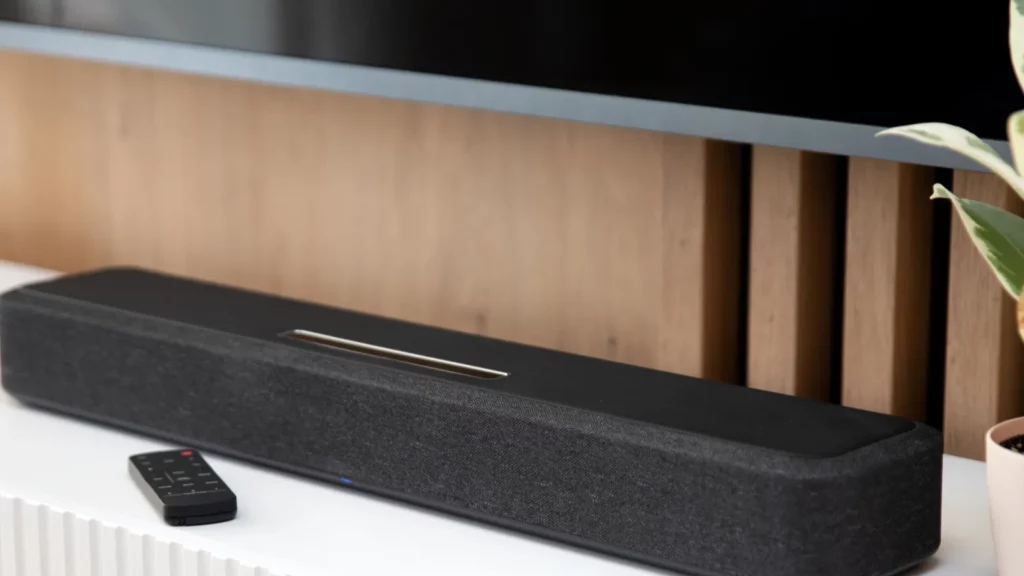
A soundbar is a compact speaker unit that usually sits under the TV. Many modern units include a subwoofer.
Advantages:
- Simple plug-and-play setup
- Sleek, space-saving design
- Significant upgrade over TV speakers
- Ideal for casual viewers or small spaces
Disadvantages:
- Limited soundstage and loudness
- Cannot easily upgrade individual components
- Fewer advanced features than a receiver
- Spending more may not improve performance
Home theater system
A home theater system includes front, rear, center, and subwoofer speakers for full surround sound. Some systems also include Blu-ray/DVD players or amplifiers.
Advantages:
- Immersive, cinema-like sound
- Ideal for large rooms or dedicated entertainment spaces
- Flexible upgrades and future-proofing
- Supports Dolby Atmos and advanced surround formats
Disadvantages:
- Higher cost
- Requires more space and wiring
- More complex setup
Buying recommendations
For under $500, a soundbar is usually the best choice. If you’re serious about high-quality audio and have more than $500 to spend, start with a receiver and quality speakers.
A starter 2.1 system can be upgraded over time to 5.1, 7.1, or even Dolby Atmos configurations. Proper placement and a universal remote can make the system easier to use for everyone.
Why home theater surround sound is better than a soundbar
Soundbars improve dialogue clarity and offer modest surround effects, but they cannot match a properly set up surround system.
- Pinpoint soundstage accuracy: Front, center, and rear speakers accurately position audio, enhancing immersion.
- Crisp, natural vocals: Dedicated center channels capture dialogue with clarity, preserving emotion and tone.
- High-volume frequency response: Larger speaker cabinets handle high output without distortion, maintaining accuracy across all frequencies.
- Deep, powerful bass: Soundbars cannot reproduce the low-frequency extension and transient speed of a dedicated subwoofer.
- Diffuse rear surround: Rear and overhead speakers create a fully immersive environment, essential for Dolby Atmos and DTS:X.
- Optimizable sweet spots: Multiple speakers allow tuning for listening positions, unlike fixed soundbars.
- Theater-style presentation: Home theater systems visually and sonically demonstrate the full entertainment experience, elevating movies, concerts, and high-res audio.
The best starting point for home theater systems
Begin with a pair of stereo speakers and a receiver or integrated amplifier. Gradually add surround and height speakers, along with a subwoofer.
A flexible system allows upgrades without replacing the entire setup. Popular options include Klipsch Reference Theater Packs, Elac Debut 2.0, and Onkyo or Denon receivers.
These combinations provide immersive sound and a platform to expand as your budget allows.
Stepping into a high-quality home cinema
Receivers like the Denon AVR-X1600H offer powerful amplification, multiple HDMI inputs, streaming via Bluetooth or AirPlay 2, and support for Dolby Atmos and DTS:X.
Room correction, phono inputs, and compatibility with smart assistants make receivers versatile hubs for home entertainment. Higher-end models such as the Denon AVR-X2600 or AVR-X3600 offer even greater power, connectivity, and multi-channel audio options.
Why wired home theater still outperforms wireless systems
While wireless solutions are convenient, wired receivers provide flexibility, higher-quality amplification, and better long-term upgrade paths.
The combination of dedicated speakers, proper placement, and advanced room correction ensures a cinematic experience that soundbars and wireless speakers cannot replicate.
Enjoy the full cinematic experience in your home
If immersive sound, precise imaging, and powerful bass matter most, a home theater receiver and properly arranged speakers will always outperform a soundbar.
Soundbars are excellent for casual listening or space-limited setups, but to feel the full impact of movies, music, and games, nothing replaces a complete receiver-driven system.
Start small, upgrade over time, and transform your living room into a theater-quality experience.
TL;DR
- AV receivers still rule for sound quality. Despite the rise of soundbars and wireless speakers, a wired home theater receiver with separate speakers still delivers the most immersive, cinematic audio.
- Soundbars and wireless speakers win on convenience. They’re compact, easy to set up, and great for small spaces or apartments, but they have limited soundstage, loudness, and upgradability.
- Separate speakers = better, richer audio. Larger drivers, dedicated channels (front, center, surround, subwoofer), and formats like Dolby Atmos and DTS:X create deeper bass, clearer dialogue, and precise 3D positioning that soundbars can’t fully match.
- Room correction is a huge advantage for receivers. Modern AV receivers use tools like DIRAC Live and built-in calibration to optimize sound for your room, which helps them outperform most plug-and-play soundbars.
- Wireless is improving, but still behind. Wireless speakers and virtual surround tech (like DTS Virtual:X) are getting better, but they’re still limited by bitrate, interference, and lack of true multi-channel hardware.
- The best choice depends on the budget and space.
- Under $500 or limited space → a soundbar is usually the smarter, simpler pick.
- Above $500 and serious about movies → start with a receiver and 2.1 or 5.1 speakers and upgrade over time.
- Wired home theater is more future-proof. AV receivers let you upgrade individual parts, add more speakers, and support advanced formats, making them the best long-term value for a true home cinema feel.
This article was made with AI assistance and human editing.
If you liked this, you might also like:
Trending Products

iRobot Roomba Plus 405 (G181) 2in1 ...

Tipdiy Robot Vacuum and Mop Combo,4...

iRobot Roomba 104 2in1 Vacuum &...

Tikom Robot Vacuum and Mop Cleaner ...

ILIFE Robot Vacuum

T2280+T2108

ILIFE V5s Pro Robot Vacuum and Mop ...

T2353111-T2126121

Lefant Robot Vacuum Cleaner M210, W...