
In consumer technology, every new release is often expected to deliver dramatic redesigns or groundbreaking features.
Yet sometimes the most influential products succeed by refining what already works instead of reinventing it. The Apple Watch Series 11 is a strong example of how steady evolution can outperform flashy innovation.
At first glance, the latest smartwatch from Apple may feel familiar to longtime users. However, that familiarity reflects a deliberate strategy focused on consistency, usability, and long-term value.
This approach shows that market leadership does not always depend on massive year-over-year changes. Read on to discover how small, thoughtful upgrades can make a big impact on your daily tech experience.
A refined formula that already works
The smartwatch market has matured significantly over the past decade. Early devices struggled with limited battery life, weak app ecosystems, and inconsistent health tracking accuracy. Today’s wearables are more reliable, and Apple’s steady design philosophy has played a major role in shaping this evolution.
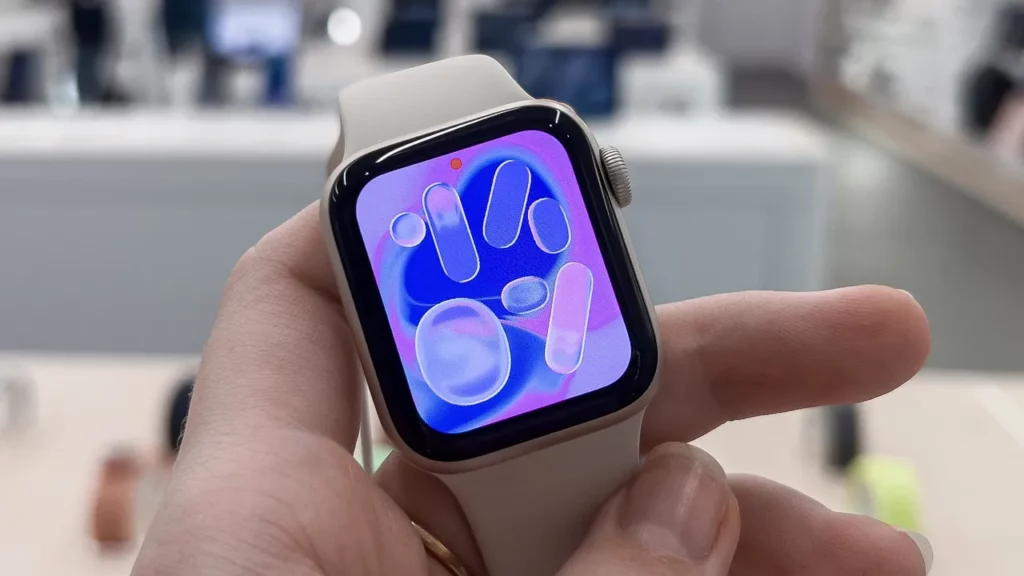
The Series 11 builds on a well-established formula that prioritizes comfort and functionality. Its wide-angle OLED display reaches up to 2,000 nits of brightness, while the familiar rectangular design ensures usability without unnecessary complexity.
This combination creates a device that feels intuitive from the moment you strap it on. Beyond visuals, the watch offers an extensive set of sensors designed for everyday health monitoring.
Little‑known fact: The Apple Watch Series 11 is available with 40 percent recycled content, including 100 percent recycled cobalt in the battery part of Apple’s carbon‑neutral effort under its Apple 2030 plan.
Electrical and optical heart sensors, blood oxygen monitoring, wrist temperature sensing, and noise alerts help users stay informed about their well-being throughout the day. Instead of introducing experimental features, Apple continues to focus on reliability and accuracy.
Does iteration matter more than reinvention?
For many users, the biggest surprise about the Series 11 is how similar it feels to the Apple Watch Series 10. Both models share the same S10 chip, nearly identical dimensions, and a comparable overall experience. This modest upgrade cycle highlights Apple’s confidence in its existing smartwatch formula.
Still, incremental improvements are present. The new Ion-X glass used on aluminum variants is designed to be more scratch-resistant, improving durability over time. These changes may not transform daily usage instantly, but they contribute to long-term satisfaction and device longevity.
The addition of 5G connectivity on cellular models also represents a targeted upgrade.
Little‑known fact: The Series 11 is the first Apple Watch to support 5G reduced‑capacity cellular connectivity, designed to improve reception and throughput when off Wi‑Fi.
Users who rely on standalone connectivity may notice improved reception and faster data speeds outside Wi-Fi coverage. By focusing on practical enhancements instead of sweeping redesigns, Apple reduces the risks often associated with major hardware changes.
Battery improvements that focus on convenience
Battery life has historically been one of the biggest challenges in smartwatch design. While the Series 11 does not redefine endurance, it introduces subtle upgrades that make everyday use more flexible. Apple rates the device for up to 24 hours of regular use and up to 38 hours in Low Power Mode.
Fast charging is where the improvements become most noticeable. A quick 15-minute charge can provide several hours of typical usage, while a brief five-minute top-up may be enough for overnight sleep tracking.
This level of convenience allows users to integrate the watch seamlessly into busy routines without constant charging concerns.
Apple also emphasizes long-term battery health through optimized charging settings. By sometimes limiting full charge levels to around 80 percent, the watch helps extend overall battery lifespan.
These decisions demonstrate how software-driven refinements can enhance ownership experiences just as much as hardware innovation.
Is it a strong fitness companion for everyday users?
Fitness tracking continues to be one of the most compelling reasons to buy an Apple Watch. The Series 11 provides dependable heart rate monitoring, activity tracking, sleep insights, and workout detection for users who prioritize general wellness.
Its lightweight aluminum design ensures comfort during extended exercise sessions. For casual runners, walkers, or gym enthusiasts, the watch performs reliably.
However, those who engage in demanding outdoor adventures may prefer the rugged features of the Apple Watch Ultra 3. Apple’s decision to maintain distinct product tiers ensures that mainstream users are not overwhelmed by specialized functionality.
Its slimmer, lighter design can make it more comfortable to wear overnight, which may make sleep tracking more practical for some users. This highlights how comfort and usability can be just as important as technical specifications.
How software updates shape the real experience
One of the most important aspects of the Series 11 lies beyond its physical design. With watchOS 26, Apple introduced features such as hypertension notifications and a simplified sleep score system. These additions enhance health insights without requiring entirely new hardware components.
Many of these software updates are also available on older Apple Watch models. This backward compatibility extends device lifespans while strengthening customer trust in Apple’s ecosystem. Instead of forcing annual upgrades, the company focuses on delivering meaningful improvements over time.
This strategy reflects a broader shift in wearable technology. Smartwatches are increasingly defined by intelligent software rather than raw hardware specifications. By investing heavily in platform development, Apple ensures that innovation continues even during incremental hardware cycles.
Why ecosystem strength still matters
The Apple Watch’s dominance cannot be explained by hardware refinements alone. Its deep integration with iPhones, messaging services, mobile payments, and location tools creates a unified experience that competitors often struggle to match.
This ecosystem advantage amplifies even small product improvements. Users benefit from seamless syncing, intuitive notifications, and access to a broad range of Apple and third-party apps.
These features transform the watch into an extension of the smartphone rather than a standalone gadget. As a result, Apple can maintain market leadership without needing to reinvent its smartwatch design every year.
For first-time buyers, this cohesion makes the Series 11 feel complete right out of the box. For returning users, it reinforces familiarity and brand confidence. Over time, these factors contribute to sustained customer loyalty and strong upgrade cycles.
When being predictable becomes a competitive advantage
Technology enthusiasts sometimes criticize iterative upgrades as uninspiring. However, predictability can be a powerful strength in a mature product category. Consumers increasingly prioritize stability, comfort, and long-term reliability over experimental changes.
By avoiding unnecessary redesigns, Apple minimizes the risk of introducing bugs or usability issues. This careful evolution ensures that each new generation builds upon proven strengths rather than chasing trends.
In doing so, the Series 11 demonstrates how disciplined innovation can outperform dramatic reinvention. This philosophy also reduces pressure on users to upgrade annually.
Owners of recent models can confidently skip a generation, while those upgrading from older devices still experience meaningful improvements. Over time, this balanced approach strengthens trust and enhances overall satisfaction.
Why steady evolution keeps Apple ahead
The Apple Watch Series 11 may not introduce groundbreaking changes, but it represents a strategic masterclass in product refinement. Its polished design, dependable health tracking, improved charging flexibility, and ecosystem integration reinforce Apple’s leadership in the smartwatch market.
For newcomers, it delivers one of the most complete wearable experiences available today. For existing users, it proves that progress does not always require dramatic transformation. Sometimes, perfecting what already works is the most powerful form of innovation.

TL;DR
- Apple Watch Series 11 shows that steady refinement can maintain market dominance.
- Iterative upgrades like stronger glass and 5G connectivity improve long-term usability.
- Fast charging and modest battery gains enhance everyday convenience.
- Fitness tracking remains reliable for mainstream users, while Ultra targets athletes.
- watchOS updates add meaningful health features without requiring new hardware.
- Deep ecosystem integration strengthens Apple’s competitive advantage.
- Predictable evolution builds user trust and reduces unnecessary upgrade pressure.
- The Series 11 proves innovation can succeed through polish rather than reinvention.
This article was made with AI assistance and human editing.
If you liked this, you might also like:
Trending Products

iRobot Roomba Plus 405 (G181) 2in1 ...

Tipdiy Robot Vacuum and Mop Combo,4...

iRobot Roomba 104 2in1 Vacuum &...

Tikom Robot Vacuum and Mop Cleaner ...

ILIFE Robot Vacuum

T2280+T2108

ILIFE V5s Pro Robot Vacuum and Mop ...

T2353111-T2126121

Lefant Robot Vacuum Cleaner M210, W...