
A phone that becomes a paperweight for cellular service is a serious problem when it leaves owners staring at SOS daily. Apple says a small number of U.S. iPhone 18 Pro Max units on AT&T can suffer this failure.
The affected phones can lose calls, texts, and mobile data, and Apple says software cannot restore service after the failure occurs. That makes this more than a routine network glitch, raising questions about hardware and carrier conditions involved.
The issue is especially notable because it appears tied to a specific iPhone model and carrier combination. AT&T users with unaffected iPhone 18 Pro Max units can still take preventive steps before the problem appears.
What is happening to AT&T iPhones
Reports appeared shortly after the iPhone 18 Pro Max launch. Affected customers have reported intermittent or complete loss of wireless connectivity, with AT&T reception replaced by SOS mode.
The problem can block calls, SMS messages, and mobile data. Apple has not disclosed how many phones are affected, although reports across support forums and other online platforms suggest complaints number in the thousands.
Why does the phone show SOS?
An SOS indicator means the iPhone is not connected to its normal cellular network. It may still be able to place emergency calls through another available carrier network. For affected AT&T customers, the reported failure can prevent ordinary calls, SMS messages, and mobile-data access.
The situation is particularly serious away from Wi-Fi. AT&T warned affected customers that some phones might be unable to complete calls, texts or data sessions, including calls to 911. Depending on location and configuration, emergency calls may still be possible through another carrier network, Wi-Fi Calling or Emergency SOS via satellite.
This is not a general AT&T outage
Apple and AT&T are not describing the incident as a broad network outage affecting ordinary AT&T subscribers. Instead, the reports are tied specifically to certain iPhone 18 Pro Max units using AT&T service in the United States.
So far, no other iPhone model or carrier has been confirmed as affected. That narrow combination makes the incident unusual because the same AT&T network can continue to work normally for other devices.
Why affected phones need replacement
Apple has drawn an obvious line between preventing the failure and recovering from it. Updates reduce the chance of another device failing, but they will not restore cellular service afterward.
Apple is directing affected customers toward Apple Support, AT&T, Apple Stores, or AT&T locations for hardware replacement. The policy suggests a hardware-level failure or hardware-and-firmware interaction, although Apple has not identified the component.
Could the modem be involved?
The U.S. iPhone 18 Pro Max features Qualcomm’s Snapdragon X80 modem, while versions sold in international markets use Apple’s C2 modem. The smaller iPhone 18 Pro uses Apple’s C2 modem worldwide.
That difference has prompted speculation about the Snapdragon X80, but there is no evidence that the modem itself is defective. The issue could involve firmware, antennas, carrier configuration, eSIM provisioning, or another radio component.
Little-known fact: Apple sells four iPhone 18 Pro Max hardware versions, and only the U.S. A3473 model uses a Qualcomm modem.
Could carrier-specific conditions be involved?
Cellular connectivity depends on several systems working together, including the modem, antennas, carrier settings, network authentication, supported frequency bands, eSIM provisioning, device firmware and carrier-side systems.
A problem involving that combination could appear only under particular carrier conditions. That possibility may help explain why Apple has observed the failure on AT&T, but it does not establish that AT&T’s network, Qualcomm’s modem or any other individual component is defective.
What iOS 27.0.1 actually does
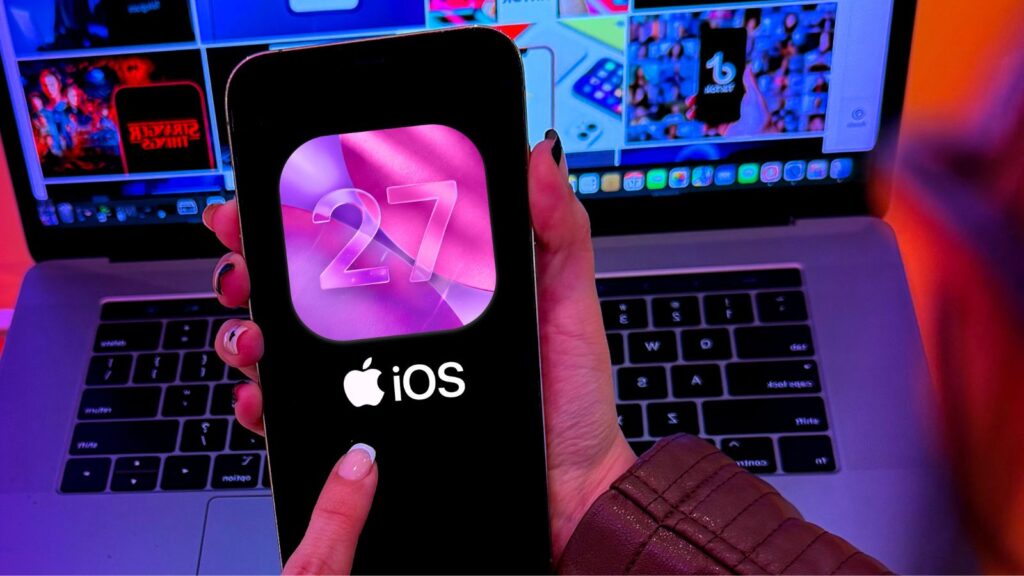
Apple released iOS 27.0.1 shortly before confirming the replacement guidance. The update is intended to help prevent additional iPhone 18 Pro Max devices from encountering the cellular failure.
Owners can check for updates in Settings > General> Software Update. Installing it is advisable for an unaffected AT&T iPhone 18 Pro Max, especially when it serves as a primary communication device.
Little-known fact: Apple’s public iOS 27.0.1 release notes list fixes for a Face ID-related restart, a camera color artifact, and an unresponsive touchscreen condition. They do not mention the AT&T cellular issue.
AT&T carrier settings matter too
Apple also issued an AT&T carrier-settings update containing network-specific configuration information. Such updates can adjust settings used for registration, services, roaming, access technologies, and other carrier functions.
The carrier update will roll out automatically over 14 days. Owners can also check manually in Settings > General> About, where any available update should prompt installation.
Can the updates restore service?
For an unaffected phone, installing both updates is the recommended preventative step. Keeping the device connected to Wi-Fi and powered on can also help it receive the carrier update automatically.
For a phone already stuck in SOS mode because of this failure, the updates should not be treated as a repair. Apple says affected devices require replacement, so repeatedly resetting network settings is unlikely to solve the underlying problem.
What should affected owners do?
Owners whose phones still have service should install iOS 27.0.1 and check for the AT&T carrier-settings update. A backup is also sensible before visiting Apple or AT&T in case replacement is needed.
Owners who have already lost service should contact Apple Support or AT&T and identify the phone as an iPhone 18 Pro Max affected by the AT&T cellular issue. Apple has advised those customers to arrange hardware replacement.
Emergency communication raises the stakes
A cellular failure is more concerning when it can interfere with emergency communications. Wi-Fi may keep internet-based services working at home, but it does not automatically restore ordinary cellular calling or mobile data away from that connection.
Until the device is replaced, affected customers should consider Wi-Fi calling, another phone, or another backup communication method. An iPhone showing persistent SOS should be treated as a service issue that requires assistance from the manufacturer or carrier.
The iPhone 18 Pro Max remains advanced
The cellular problem is particularly awkward because the iPhone 18 Pro Max is otherwise one of Apple’s most advanced smartphones. It uses the A20 Pro chip and includes hardware aimed at demanding performance and on-device artificial intelligence.
Apple specifies a 6.9-inch display, storage options from 256GB through 2 terabytes, and a 48-megapixel primary camera. The device includes a variable-aperture system and manual camera controls.

Smart-home connectivity still works differently
The iPhone 18 Pro Max also includes Apple’s N1 wireless chip, supporting Wi-Fi 7, Bluetooth 6, and Thread. Those technologies can remain useful for smart-home devices when cellular service is unavailable.
A phone can continue controlling compatible smart-home devices over Wi-Fi while remaining unable to make ordinary cellular calls, send SMS messages, or use mobile data outside the home network.
What remains unconfirmed about the issue
The exact number and percentage of affected phones remain unknown. Apple has confirmed a small number of cases, but online complaint totals cannot establish the failure rate among all iPhone 18 Pro Max owners.
It also remains unclear whether modem firmware, antenna hardware, eSIM provisioning, or AT&T compatibility is responsible. The Snapdragon X80 is a possible factor due to the model split, but not a confirmed cause.
The current remedy remains straightforward
As of October 18, 2026, Apple’s reported remedy has 2 parts. AT&T iPhone 18 Pro Max owners whose devices are still working should install iOS 27.0.1 and check for the carrier-settings update to reduce the risk of failure.
Owners whose devices have already lost AT&T service due to this issue should contact Apple or AT&T to arrange a replacement. Because Apple has not disclosed the cause, the incident is most accurately described as a cellular service failure affecting a small number of AT&T iPhone 18 Pro Max devices that requires replacement after it occurs.
TL;DR
- Apple says a small number of U.S. iPhone 18 Pro Max units on AT&T can lose cellular service and become stuck in SOS mode.
- iOS 27.0.1 and AT&T’s carrier update are intended to prevent failures, but they cannot restore service after the problem occurs.
- Apple has not confirmed a defective Snapdragon X80 modem, leaving the modem, firmware, antenna, and carrier compatibility among possible factors.
- Customers whose phones have already lost service should contact Apple or AT&T because Apple recommends hardware replacement rather than another software fix.
This article was made with AI assistance and human editing.
If you liked this, you might also like:
Trending Products

iRobot Roomba Plus 405 (G181) 2in1 ...

Tipdiy Robot Vacuum and Mop Combo,4...

iRobot Roomba 104 2in1 Vacuum &...

Tikom Robot Vacuum and Mop Cleaner ...

ILIFE Robot Vacuum

T2280+T2108

ILIFE V5s Pro Robot Vacuum and Mop ...

T2353111-T2126121

Lefant Robot Vacuum Cleaner M210, W...