
A major player in wearable health trackers has stormed back into the US market with a bold new hardware refresh that promises long battery life, deep health insights, and no required subscription.
After being blocked from US imports in 2025 due to a patent dispute and an ITC ruling, the latest version of the Ultrahuman Ring Pro returns to the US after receiving clearance from US Customs and Border Protection following a redesign.
The result is a tracker that lasts up to 15 days on a single charge, stores up to extended periods of health data on-device before syncing to the app. Read on to find out why this matters for tech enthusiasts and smart home users.
What the Ring Pro is
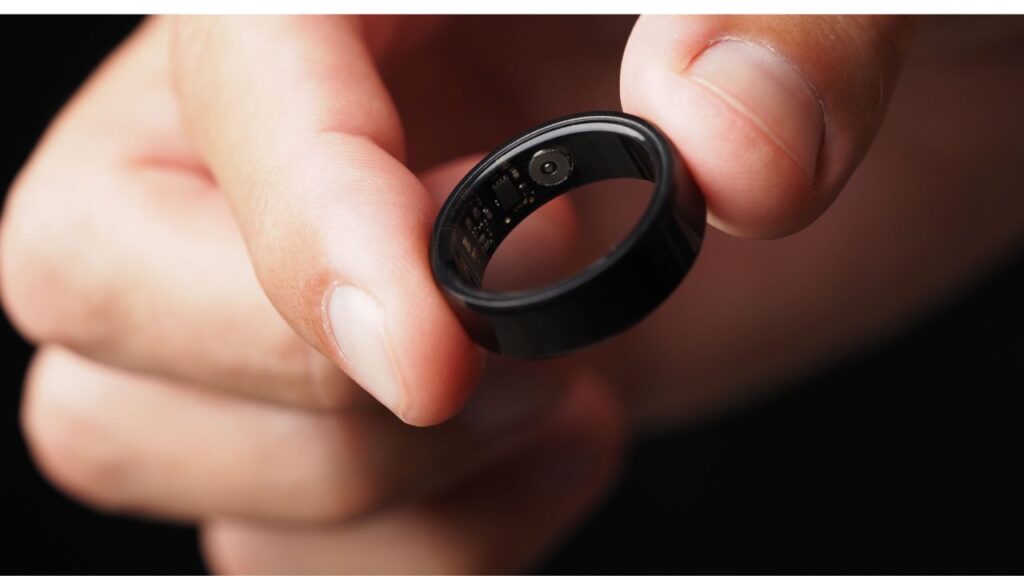
The Ultrahuman Ring Pro is a third‑generation wearable designed as a premium but subscription‑free health and activity tracker.
All tracking and processing are done without a screen on the device; instead, data flows wirelessly to the companion app on iOS or Android. The Pro is designed as a subscription-free health tracker focused on continuous biometric monitoring and ecosystem integration.
US pricing begins around $399 for basic finishes and up to about $479 for premium options, with preorder discounts available early in the rollout. There is no subscription required to unlock the ring’s insights or features.
Key specifications
The Ring Pro’s design and internal specs are engineered to balance comfort, durability, and battery life for everyday wear. The body is made from titanium alloy, designed for durability and lightweight wear. Sizes span from 5 to 14, so users with different hands can find a snug fit.
The device is water resistant to 100 meters, making it suitable for showering, swimming, and workouts without worry. A proprietary mechanism called ProRelease lets users expand the ring slightly for easier removal in emergencies. Battery life is reported up to 15 days, depending on usage mode, with lower endurance under higher sensor activity.
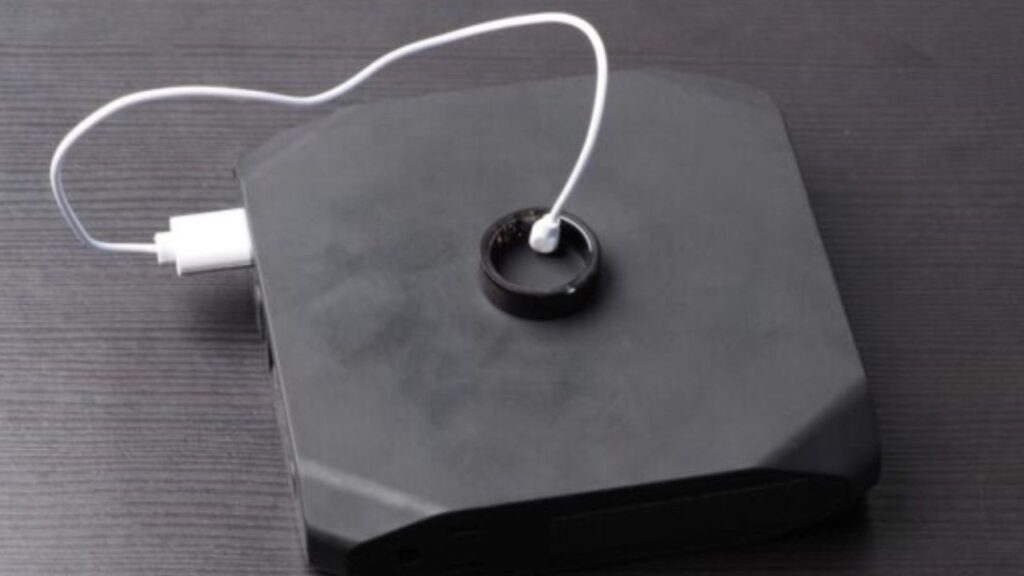
A magnetic charging interface with DC pins handles refueling on its own, and the optional Pro charging case dramatically extends longevity. The case itself provides up to another 45 days of battery when the ring is docked and charges via USB‑C or any Qi wireless pad.
How it works
At its core, the Ring Pro is a biometric sensor hub that sits on your finger. It uses a redesigned photoplethysmography (PPG) system to measure blood flow patterns, which the software translates into heart rate, heart rate variability (HRV), and even minute changes in skin temperature that indicate stress.
A three‑axis accelerometer and motion processing pick up steps, activity types, posture, and workouts such as running, cycling, or strength sessions. Unlike trackers that send raw data to cloud servers for processing, the Ring Pro uses a dual‑core processor to crunch many signals locally.
If you want a deeper look at how the ring’s AI-powered recommendations and ecosystem integration work, check out Ultrahuman Ring Pro brings 15 days of battery life and AI-powered health insights.
The app also handles firmware updates, feature switches, and data exporting so that metrics can sync into Apple Health, Google Fit, or other ecosystem hubs.
Comparisons with competitors
In the current wearable tracker market, the Ring Pro finds itself up against other small devices such as Oura, Samsung, Whoop, and the company’s own Ring Air model.
Each has strengths and trade‑offs, but the Pro is positioned toward users who want long battery life, minimal data fees, and deep health metrics without recurring costs.
Oura’s latest ring, often considered a leader in sleep and recovery insights, lists for around $499 or more with a yearly subscription after the first period. Its battery lasts about seven days, and much of its artificial intelligence‑driven insight relies on cloud processing.
In contrast, the Ultrahuman Ring Pro offers roughly double the battery life and months of onboard storage without any subscription requirement. The absence of ongoing fees is a significant advantage for people wary of recurring costs or data sharing with cloud providers.
The Ring Air, a lighter and less expensive ring in the same portfolio, costs around $349 and weighs less than the Pro but sacrifices battery life and onboard processing power.
Other wearables like the Samsung Galaxy Ring and Whoop 5.0 band offer their own unique appeals. Samsung’s option may deliver deeper integration with its Android ecosystem and onboard ECG capabilities, with battery life between seven and ten days.
Smart home integration and use cases
For smart home enthusiasts, the Ring Pro excels when paired with ecosystem platforms such as Apple Home, Home Assistant, or Alexa routines.
Because it exports data to Apple Health or Google Fit, users can build automations that react in real time or on trends. Low HRV might set off a living room lighting scene that supports rest, or a pattern of poor sleep could trigger adjustments in thermostat schedules to optimize for comfort.
While the Ring Pro does not include direct home network radios like Thread or Zigbee, its Bluetooth 5.3 connection is stable enough for keeping data flowing to phones or tablets that bridge into hub software.
The option to charge the case on a Qi pad integrated into smart furniture or a desk adds convenience for connected spaces. The persistent storage means multi‑day trips or off‑grid scenarios do not erase data, ensuring continuity in automation triggers and personal insights.
Little-known fact: The first 1,000 US customers to preorder received the Ring Pro bundled with the Pro Charging Case for $349, a $130 saving off the standard $479 bundle, meaning the steepest discount window closed almost immediately after launch.
TL;DR
• The Ultrahuman Ring Pro returns to the US after resolving a 2025 patent dispute and adds a redesigned titanium body and on‑device processing.
• It offers up to 15 days of battery life in Chill mode and about 12 days in Turbo, with a charging case adding 45 extra days.
• The ring tracks heart rate, variability, SpO2, sleep stages, activity, and more using PPG sensors and on‑chip machine learning.
• Onboard storage holds 250 days of data, and the optional case stores up to a year’s worth.
• There is no subscription fee, with pricing from about $399–$479 and preorder discounts in early 2026.
• Compared to competitors like Oura, Samsung, and Whoop, it stands out with long life, no subscription, and local processing.
• It plays nicely with smart home systems via app exports, enabling health‑based automations and ecosystem integrations.
This article was made with AI assistance and human editing.
If you liked this, you might also like:
Trending Products

iRobot Roomba Plus 405 (G181) 2in1 ...

Tipdiy Robot Vacuum and Mop Combo,4...

iRobot Roomba 104 2in1 Vacuum &...

Tikom Robot Vacuum and Mop Cleaner ...

ILIFE Robot Vacuum

T2280+T2108

ILIFE V5s Pro Robot Vacuum and Mop ...

T2353111-T2126121

Lefant Robot Vacuum Cleaner M210, W...