The iPhone versus Android debate usually sounds like a clean fight between two separate worlds. But one of the most important parts of many premium iPhones comes from Samsung, the same name Apple fans often argue against when comparing Galaxy and iPhone devices.
That hidden link makes the rivalry more interesting than a simple brand battle. Samsung Display has remained a major Apple OLED supplier, while Apple has also worked with Samsung on other chip-related supply plans, showing how modern tech depends on cooperation even when companies compete fiercely in public.
The hidden Samsung connection behind iPhone displays
The smartphone battle between Samsung and Apple appears simple from the outside. One company sells Galaxy devices running Android, while the other builds iPhones with iOS. Behind the scenes, however, Samsung’s display business has become one of Apple’s most important hardware partners.
Samsung Display, a subsidiary of Samsung Electronics, has supplied a large share of Apple’s iPhone OLED panels since Apple first adopted OLED in the iPhone X in 2017. Samsung’s scale and OLED expertise have made it one of Apple’s most important display suppliers.
Apple’s demand is unusually high because a major iPhone launch requires enormous panel output. Reports in 2017 said Apple ordered about 70 million bendable OLED panels from Samsung for its first OLED iPhone generation, showing how closely the companies depend on each other despite their public competition.
Why Apple relies on a smartphone rival
The relationship between Samsung and Apple creates a rare technology paradox. Samsung competes directly against the iPhone with Galaxy smartphones, yet Samsung Display provides some of the most visible components inside Apple’s flagship devices.
For premium smartphones, OLED screens require accurate colors, strong contrast, high brightness, and consistent manufacturing quality. Samsung Display has built deep expertise in those areas, making it one of the few companies capable of meeting Apple-scale display demand.
The connection goes beyond displays. Samsung Electronics remains listed among Apple suppliers, and Apple said in 2025 that Samsung would supply chips from its Austin, Texas, plant for Apple products, including iPhones. The companies compete in consumer products while remaining connected through a complex global supply chain.
Little-known fact: Samsung also plays a role in Apple’s broader chip supply chain, including memory and other semiconductor components, deepening the relationship beyond displays.
The rivalry that reached the courtroom
Samsung and Apple are not only supply-chain partners. They also spent years in court after Apple accused Samsung of infringing iPhone-related design and software patents.
The legal fight began in 2011, reached the U.S. Supreme Court, and was settled in 2018 after years of verdicts, appeals, and damages disputes. Samsung argued that it had not simply copied Apple and that Android’s development followed its own path.
Google executive Hiroshi Lockheimer testified in 2014 that Google did not look to copy the iPhone when it designed Android. The broader Android-versus-iPhone debate is more complicated than a simple copycat story because both platforms have adopted ideas that became popular across mobile software.
Both platforms borrow from each other
The Android versus iPhone debate often focuses on which company introduced more features first. The reality is more complicated because both operating systems have repeatedly adopted ideas that became popular on the competing platform.
Apple has adopted ideas Android users had already seen, including Home Screen widgets in iOS 14. With iOS 26, Apple added Call Screening, Live Translation, and screen-based visual intelligence features, narrowing some everyday differences between the platforms.
Android has also adopted ideas associated with the iPhone and iOS over the years, which makes broad originality claims hard to simplify. In practice, both platforms compete by refining features that users already understand.
Little-known fact: Industry reports said Apple’s iPhone 16 Pro models and Google’s Pixel 9 used Samsung’s newer M14 OLED material before Samsung’s Galaxy S25 Ultra, which was reported to use older M13 OLED material.
How does this affect smart home technology?
The Samsung and Apple relationship matters beyond smartphones because displays, artificial intelligence, and ecosystem choices influence the wider smart home market. Premium screens are becoming central to smart displays, connected appliances, and emerging devices such as smart glasses.
The larger lesson is that hardware partnerships and software competition can exist together. Apple’s controlled ecosystem approach and Android’s open model reflect similar choices seen in smart home platforms, where users balance simplicity with flexibility.
As operating systems continue becoming more similar, compatibility may matter more than brand loyalty. Smart home buyers increasingly look at support for standards, security updates, and device integration instead of choosing products based only on smartphone preferences.
Security and market trends reshape the debate
Android 16 adds Advanced Protection, a device-level security setting that bundles Google’s strongest protections against online attacks, harmful apps, unsafe sites, and scam calls, including USB Protection and other safeguards.
Android has about 68% of the worldwide mobile operating system market, while iOS has about 31.94%, according to StatCounter’s May 2026 data.
The cultural divide between the platforms remains visible through features like iMessage. Blue bubbles and green bubbles have become part of smartphone identity, especially among younger users, even though both platforms increasingly offer similar everyday capabilities.
The business reality behind the rivalry
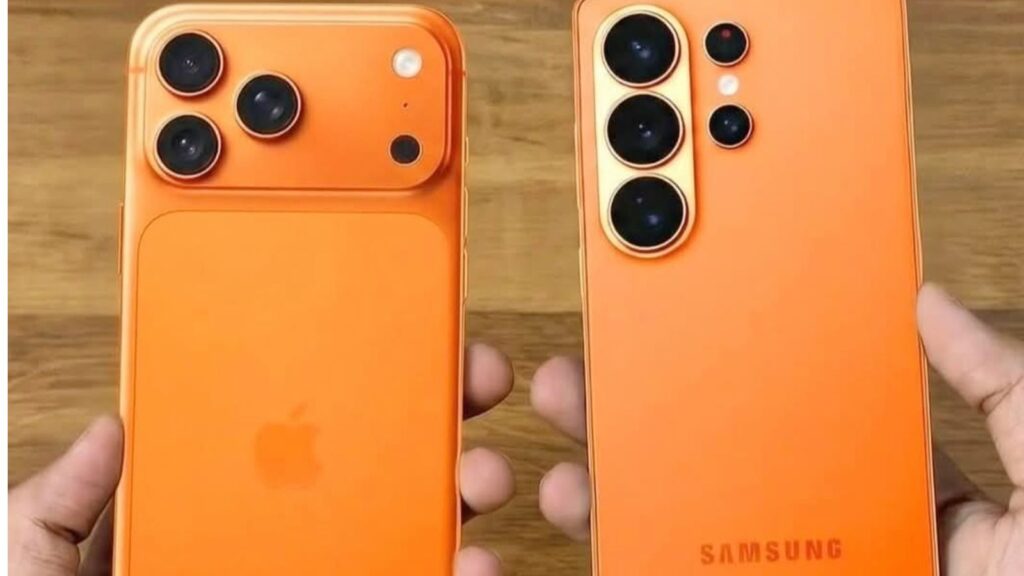
The biggest surprise for many consumers is that the Android versus iPhone battle is not simply a competition between two separate worlds. The same companies arguing over phones can also rely on each other for critical technology.
Samsung’s dual role demonstrates how modern electronics work. Samsung Electronics’ smartphone division competes with Apple, while Samsung Display operates as a major component supplier. Different business units can have different relationships with the same customer.
For smart home enthusiasts, this supply chain reality offers a useful reminder. The devices people use every day are built through partnerships that are often invisible, and the future of technology will likely depend on cooperation as much as competition.
TL;DR
- Samsung Display supplies a major share of Apple’s iPhone OLED panels, creating a surprising partnership between two companies known for smartphone competition.
- Apple and Samsung compete fiercely in phones while staying connected through display and chip supply relationships.
- Android and iOS have repeatedly adopted successful ideas from each other, making originality claims more complicated across mobile platforms.
- Smart home users benefit when ecosystems improve support for standards, security updates, and cross-platform device integration.
This article was made with AI assistance and human editing.
If you liked this, you might also like:
Trending Products

iRobot Roomba Plus 405 (G181) 2in1 ...

Tipdiy Robot Vacuum and Mop Combo,4...

iRobot Roomba 104 2in1 Vacuum &...

Tikom Robot Vacuum and Mop Cleaner ...

ILIFE Robot Vacuum

T2280+T2108

ILIFE V5s Pro Robot Vacuum and Mop ...

T2353111-T2126121

Lefant Robot Vacuum Cleaner M210, W...