
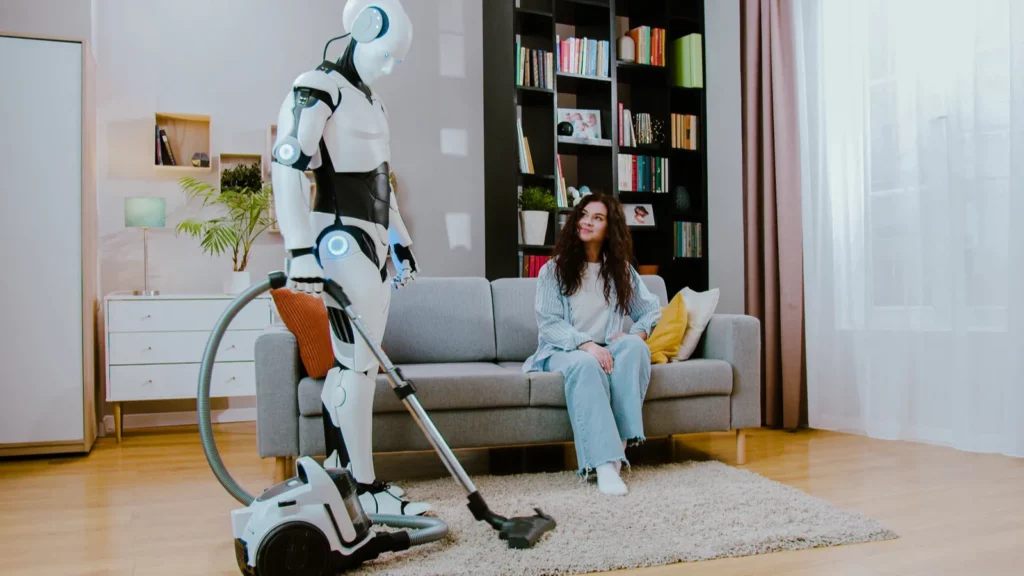
A robot did not just vacuum around a chair. Gatsby says a full-size humanoid walked into a San Francisco apartment and handled a real cleaning visit with no human cleaner physically inside the home.
That one appointment may sound small, but it hints at a bigger change in household labor. Instead of buying costly robots, people could soon book robotic help the way they book rides, deliveries, or cleaners. What happened inside that apartment shows how everyday chores may be moving from human hands to app-based machines, and why the smart home race is entering a new, more personal phase.
A historic robot cleaning milestone
On May 14, 2026, San Francisco startup Gatsby completed what is believed to be the first humanoid robot cleaning service for a U.S. residential customer, marking a milestone in consumer robotics history and real-world deployment.
The homeowner was selected randomly from Gatsby’s growing waitlist and booked the service through an iOS app, where a full-size humanoid robot arrived, entered the apartment, and completed a full cleaning session autonomously and through remote assistance.
This moment represents a shift from experimental robotics toward paid household labor delivered on demand, where users no longer own machines but instead book robot services the same way they would a ride or cleaning appointment.
How does the robot cleaning service work?
Users book through Gatsby’s app by choosing a time and entering their apartment details. Gatsby says a humanoid robot then arrives, cleans the apartment, and leaves without a human cleaner physically inside the home.
The robot cleans floors, countertops, stovetops, mirrors, bathrooms, kitchens, and surfaces; Fox News also reports claimed chores such as dishes, bed-making, and laundry folding. Some complex actions, like handling fragile items or unclear instructions, are supported through human teleoperation assistance in real time.
If the robot encounters uncertainty, it communicates with the homeowner through the app, asking questions such as where to place objects, which ensures decisions are confirmed while maintaining fully autonomous execution for most cleaning tasks.
What can the humanoid robot actually do?
The humanoid system is designed for full apartment cleaning, handling floors, countertops, stovetops, mirrors, dishes, laundry folding, and general tidying, positioning it as a replacement for traditional human cleaning services rather than a narrow robotic vacuum tool.
Tasks are divided between automated routines and adaptive manipulation, where the robot uses vision-based systems and neural control models to interact with everyday household objects like towels, dishes, and clothing in dynamic environments.
This allows the robot to operate in messy real-world homes rather than controlled laboratory spaces, which is a major step forward for humanoid systems transitioning into consumer environments at scale.
The hybrid automation model explained
Gatsby’s approach combines full autonomy with human teleoperation, creating a hybrid system where repetitive tasks are handled by the robot while edge cases are resolved remotely by human operators watching sensor feeds.
Routine cleaning, such as sweeping or wiping, is fully automated, but tasks requiring judgment or precision are routed to trained remote staff who guide the robot’s movements without physically entering the home.
This structure ensures reliability while still enabling scalability, since a single human operator can oversee multiple robots across different homes depending on task complexity and real-time needs.
Pricing and business model shift
The service is priced at $150 per visit, which aligns closely with typical human cleaning costs in major U.S. cities, particularly San Francisco, where residential cleaning ranges from $150 to $300 per appointment.
Instead of asking customers to buy a robot, Gatsby offers cleaning as an on-demand service, allowing consumers to access robotic labor without purchasing hardware.
This model reflects a broader shift toward service-based robotics, where consumers rent outcomes rather than owning machines, reducing financial barriers to adoption while enabling rapid scaling of robot deployment.
Why did cleaning become the first use case?
Home cleaning was selected as the initial application because it represents a universal chore with high demand, existing consumer spending, and relatively standardized task structures compared to other household or personal service categories.
The company identified cleaning as a stagnant industry that has seen little innovation since basic mechanical tools, despite billions of dollars already being spent annually on human cleaning services across urban markets.
By targeting a task people already pay for, Gatsby created a clear value comparison where robot labor can match or undercut human pricing while offering scheduling flexibility and consistent service delivery.
Inside the technology powering the robots
While full hardware specifications have not been publicly released, the system is relies on hardware sensor telemetry and Bluetooth proximity that allows the robot to learn behaviors from data rather than relying on rigid pre-programmed instructions.
This enables the humanoid system to interpret visual inputs, manipulate objects, and coordinate full-body movement in real time, including tasks that require two-handed coordination or interaction with flexible household items.
The same underlying approach is being explored across advanced robotics research, where a single AI model controls perception, motion, and decision-making simultaneously within complex environments.
Damage protection and consumer trust
One of the key barriers to household robotics adoption is the risk of property damage, which Gatsby addresses through a full replacement policy that covers any accidental breakage without requiring users to file claims.
The company states that it has recorded zero damage incidents so far, and its policy includes automatic replacement of items ranging from glasses and furniture to shelves and fragile household objects.
This no-penalty approach is designed to reduce consumer hesitation and encourage early adoption by removing the financial risk associated with bringing a humanoid robot into a private home environment.
Competition in humanoid robotics
1X is taking preorders with purchase and subscription options, while Tesla and Figure are developing humanoid robots but are not comparable consumer subscription services yet.
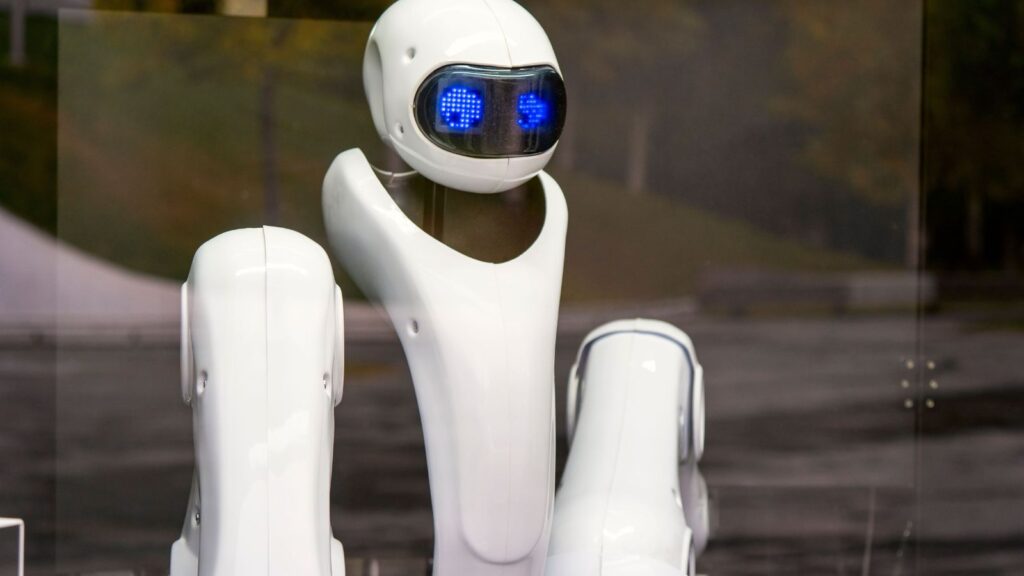
While most competitors aim to place robots in consumer or industrial ownership models, Gatsby focuses on being a distribution layer that can switch underlying robot hardware without changing the user experience.
This makes the platform potentially more adaptable, since improvements in robotics hardware can be integrated into the service.
Little-known fact: Rival humanoid robot provider 1X plans to deliver its Neo robot to the first private households in 2026 at a purchase price of at least $20,000 or $499/month to rent.
Why does this signal a bigger shift?
The introduction of humanoid robot cleaning services suggests a broader move from hardware ownership to service access, similar to how ride sharing replaced personal car ownership for many urban users.
It also demonstrates that humanoid robots are beginning to operate in unstructured home environments, which has long been considered one of the hardest challenges in robotics due to unpredictable layouts and object variety.
More importantly, it reframes robotics as labor infrastructure rather than consumer electronics, where the primary product is time saved rather than the machine itself.
What comes next for robot labor?
Gatsby is currently operating in San Francisco only, but its waitlist is expanding, with plans to scale beyond a single city as infrastructure, hardware reliability, and teleoperation systems continue to improve.
Gatsby says it is backed by NVIDIA Inception and Entrepreneurs First, signaling strong industry confidence in the service-based model as a viable path for consumer robotics adoption.
Little-known fact: Gatsby operates under a parent company called West Egg Labs, named as a deliberate reference to F. Scott Fitzgerald’s The Great Gatsby.
TL;DR
- Gatsby has completed the first known U.S. humanoid robot home cleaning service, marking a shift from experimental robotics to real consumer-level deployment in residential environments.
- The service operates through an iOS app where a humanoid robot enters homes, performs cleaning tasks, and relies on hybrid autonomy with remote human teleoperation for complex decisions.
- Pricing is set at $150 per visit, positioning robot cleaning as a direct competitor to human cleaning services while eliminating ownership and maintenance responsibilities for consumers.
- The system combines neural network-based vision control, real-time decision making, and full-body coordination to handle tasks such as mopping, dishwashing, and organizing objects.
This article was made with AI assistance and human editing.
If you liked this, you might also like:
Trending Products

iRobot Roomba Plus 405 (G181) 2in1 ...

Tipdiy Robot Vacuum and Mop Combo,4...

iRobot Roomba 104 2in1 Vacuum &...

Tikom Robot Vacuum and Mop Cleaner ...

ILIFE Robot Vacuum

T2280+T2108

ILIFE V5s Pro Robot Vacuum and Mop ...

T2353111-T2126121

Lefant Robot Vacuum Cleaner M210, W...