
Big-screen TVs have always owned the living room status battle, but 2026 is making that fight less predictable. New laser projectors are no longer just dark-room gadgets for home theater fans; they are becoming brighter, smarter, and easier to place in everyday spaces.
The shift is not happening because premium TVs suddenly look weak. It is happening because projectors are changing the value question. When one compact system can create a 100-inch, 150-inch, or even 300-inch image, buyers start asking whether they want the brightest screen or the biggest experience.
The battle that defined CES 2026
CES 2026 showcased two very different visions of the future living room. On one side were enormous televisions, including Samsung’s 130-inch Micro RGB TV and other premium displays built around advanced backlight technologies.
On the other side were new laser projectors built for cinematic scale. Hisense’s XR10 long-throw projector is designed for images up to 300 inches, while the PX4-Pro ultra-short-throw model is built for images up to 200 inches.
The result was a clear message for consumers. The question is no longer how large a screen should be. The real question is whether buyers prefer the premium television approach or the immersive projector experience.
The biggest change is economic and practical. Some modern projectors now overlap with premium TV pricing while offering much larger image sizes, especially in the 100-inch to 150-inch range.
The size-to-price advantage
Projectors have always offered large images, but previous generations often required major compromises. They needed dark rooms, long throw distances, and complicated installations that limited mainstream appeal.
Modern systems address many of those issues. Today’s ultra-short-throw models can sit just inches from a wall while still producing enormous images suitable for movies, sports, and gaming.
For consumers comparing entertainment upgrades, the value proposition is difficult to ignore. Spending television money while gaining a theater-sized image creates a compelling alternative that barely existed a few years ago.
How modern projectors work
Several technological advances have helped projectors become more practical. Laser light sources are increasingly common in premium and lifestyle models, bringing long rated life spans, strong brightness, and improved color performance compared with older lamp-based designs.
Many premium models now use single-laser or triple-laser systems. These technologies can operate for more than 20,000 hours while maintaining image quality across years of regular use.
Resolution has also improved significantly. Most leading models support full 4K Ultra HD output with high dynamic range technologies that help narrow the image quality gap between projectors and premium televisions.
The ultra-short throw revolution
Ultra-short-throw technology may be the single most important development in the projector market. Traditional projectors often required placement several feet from the screen or wall.
Modern ultra-short-throw models can project massive images from just 10 to 30 centimeters away. That allows installation on furniture positioned directly beneath the viewing surface.
The approach makes projectors feel much more like televisions. Instead of dedicating an entire room to projection equipment, homeowners can integrate these systems into conventional living room layouts.
Hisense leads the charge
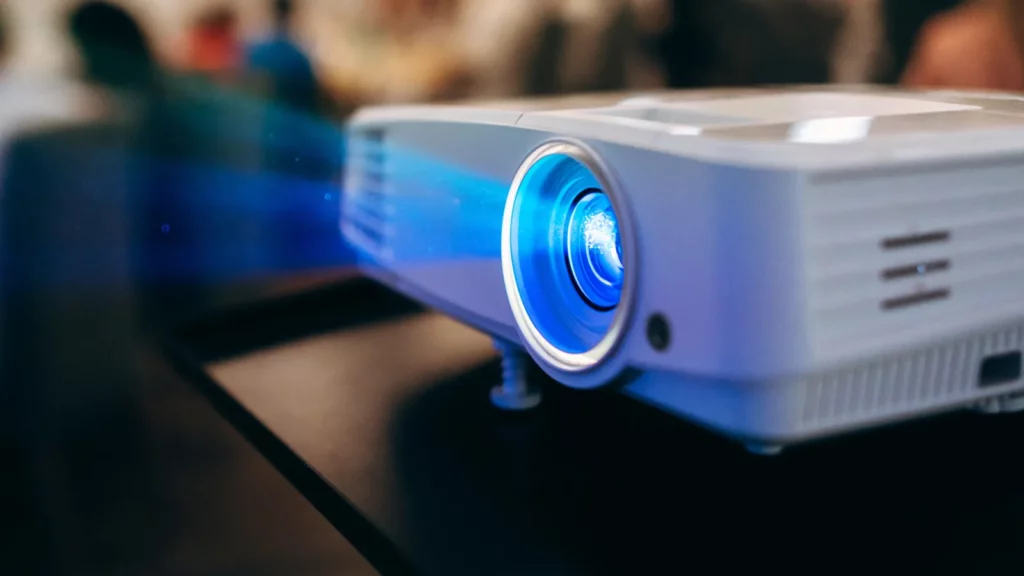
Among the most notable projector products of 2026 are the Hisense XR10 and PX4-Pro. Both models demonstrate how aggressively projector manufacturers are targeting television buyers.
The XR10 can create images up to 300 inches, far beyond the practical limits of most consumer televisions. It uses an RGB triple-laser light source, 6,000 ANSI lumens of rated brightness, and optical zoom designed to support large-screen installations.
Hisense is effectively positioning these products as direct television alternatives rather than niche home theater equipment. That shift reflects growing confidence in projector technology and consumer demand.
Little-known fact: RGB triple-laser projectors can cover the full DCI-P3 color gamut, the same standard used in professional cinema, exceeding the color range of most consumer televisions.
Other projectors worth watching
The Hisense PL2 continues to attract attention as a practical 4K ultra-short-throw laser projector. Hisense lists it with 2,700 lumens, an 80-inch to 150-inch projection range, 4K resolution, Google TV, and Dolby Vision support.
LG’s CineBeam S has emerged as a strong quality-to-price contender. It combines laser projection technology with a compact design that appeals to buyers seeking flexibility without sacrificing performance.
The Leica Cine Play 1 targets premium home cinema enthusiasts, while the XGIMI MoGo 4 focuses on portable flexibility. Together, they show how wide the projector market has become, from compact battery-powered models to higher-end laser systems.
Where televisions still win
Despite their momentum, projectors are not perfect replacements for televisions. Brightness remains one of the largest advantages held by modern TV technology.
Premium televisions deliver exceptional performance in bright environments and maintain consistent image quality throughout the day. Projectors perform best when ambient lighting is controlled, even with recent brightness improvements.
Contrast is another area where televisions excel. OLED displays continue to produce deeper blacks and stronger contrast than most projector systems, making them particularly appealing for viewers focused on image quality.
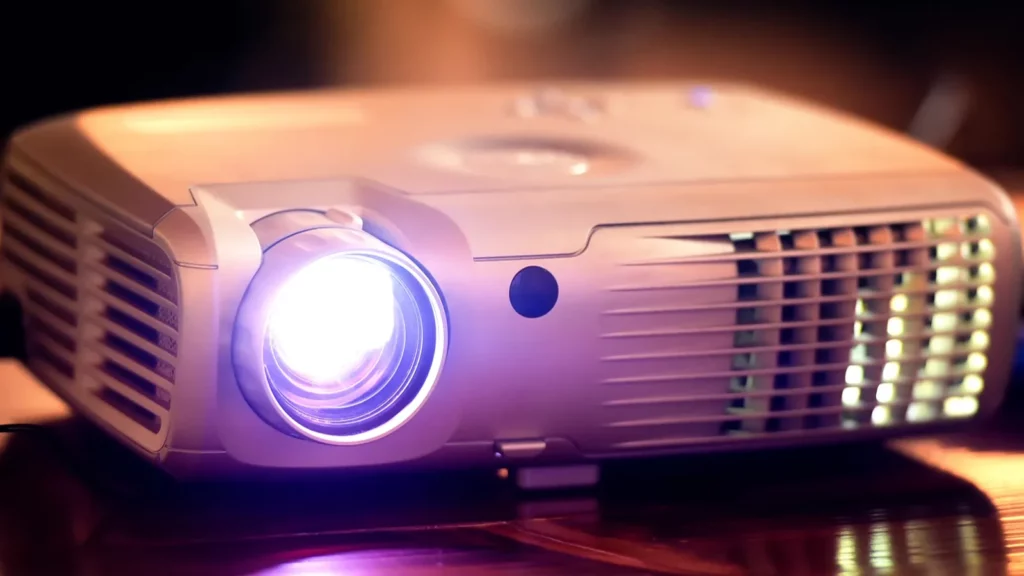
Little-known fact: Standard projectors typically require a throw ratio of 1.2 to 2.0, meaning roughly 10–15 feet of distance for a large image; UST projectors use ratios as low as 0.19:1.
TL;DR
- Modern laser projectors can produce 100-inch to 300-inch images at prices that often overlap with mainstream television models, creating a significant value advantage.
- Ultra-short throw technology allows projectors to sit only inches from a wall, eliminating many installation challenges that previously limited adoption.
- Models such as the Hisense XR10, PX4-Pro, LG CineBeam S, and Leica Cine Play 1 highlight how competitive the category has become.
- Televisions still maintain important advantages in brightness, contrast, and ease of use, particularly in rooms with substantial ambient light.
- For buyers prioritizing cinematic scale over absolute image consistency, projectors now offer a compelling alternative to ultra-large premium televisions.
This article was made with AI assistance and human editing.
If you liked this, you might also like:
Trending Products

iRobot Roomba Plus 405 (G181) 2in1 ...

Tipdiy Robot Vacuum and Mop Combo,4...

iRobot Roomba 104 2in1 Vacuum &...

Tikom Robot Vacuum and Mop Cleaner ...

ILIFE Robot Vacuum

T2280+T2108

ILIFE V5s Pro Robot Vacuum and Mop ...

T2353111-T2126121

Lefant Robot Vacuum Cleaner M210, W...