
A smart TV can know more about a home than its owner expects, including which devices share the same Wi-Fi network. That capability is now under scrutiny after researchers examined recent LG OLED televisions and reported extensive network discovery and viewing-data collection.
The September 2026 controversy involves claims about device scanning, Wi-Fi metadata, Automatic Content Recognition, and voice handling. LG has denied the most serious allegations while confirming network discovery for connectivity and smart-home features.
That distinction matters because these technologies are not unique to LG. Smart TVs commonly discover nearby devices and recognize viewing activity, but defaults, consent screens, controls, and data uses vary between products and markets.
What sparked the LG controversy?
An investigation involving Gamers Nexus, Level1Techs, and security researchers reported that current LG OLED TVs repeatedly enumerate devices on the same local network. Researchers said televisions identified internal IP addresses and device types, including equipment never paired with the TV.
The investigation also reported nearby Wi-Fi information, including network names, signal strengths, and channel numbers, plus location-related data. One test reportedly found a television mapping dozens of devices, while researchers described substantial monthly transfers associated with viewing.
Another claim concerned Automatic Content Recognition, or ACR. Researchers said LG televisions could identify content arriving through HDMI, meaning console and PC activity could potentially become part of an advertising profile when relevant services are enabled.
What does LG actually confirm?
LG has confirmed that its televisions use device-discovery functions to recognize and communicate with compatible equipment around the home. The company says this supports screen sharing, media connections, game-console recognition, and smart-home integrations.
LG separately says nearby Wi-Fi access-point and signal-strength information can help estimate a television’s approximate location for ACR services where available and enabled. The company says device discovery itself is not used for household profiling or advertising segmentation.
The company has rejected allegations of continuous ambient recording. LG says voice recognition begins through a supported wake word or remote microphone button, with unrecognized wake-word audio immediately deleted. It says ambient audio is not supplied to LG Ad Solutions for advertising.
How can a TV scan a network?
Network discovery is a normal connected-device function. Smart TVs can use SSDP, UPnP, mDNS, Bonjour, and vendor-specific services to locate cast targets, media servers, consoles, and smart-home bridges on a local network.
That process can reveal practical details about a household’s technology. Depending on the protocol and device, discovery traffic may expose an IP address, device name, manufacturer, or service type, creating an inventory of what is connected.
For smart-home owners, the concern is broader than whether a television is secretly listening. A device inventory can reveal phones, computers, watches, consoles, or connected hubs, even when those products were never deliberately paired.
Little-known fact: Security researchers found thousands of UPnP-enabled routers and smart devices sitting exposed to the open internet in 2025, many still running unpatched, years-old firmware.
Why HDMI does not guarantee privacy
ACR works by creating a compact fingerprint from content and comparing it with a reference database. LG says its system uses the TV’s internal audio processor, not its speaker, and does not collect screenshots, screen recordings, video recordings, or voice recordings.
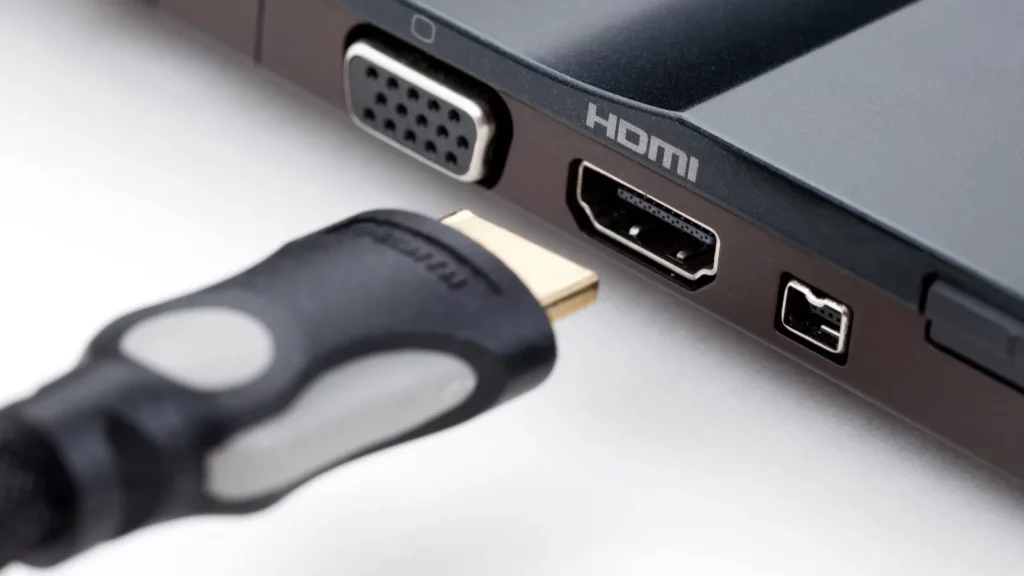
When enabled, LG says ACR can operate on supported Live TV, HDMI-connected devices, and LG Channels. An HDMI connection is therefore not automatically a privacy boundary, because the TV can analyze content passing through its supported audio path.
LG says ACR is separate from device discovery and is optional. The company states that personalized advertising requires additional consent, while ACR viewing information can support audience segmentation, viewing trends, and advertising services when applicable agreements are accepted.
Little-known fact: Court filings in a 2025 Texas lawsuit alleged that leading smart-TV ACR systems capture on-screen frames roughly every 500 milliseconds to identify what’s playing.
ACR is bigger than LG
The underlying technology is not exclusive to one manufacturer. ACR is publicly documented on major smart-TV platforms from Samsung, Roku, Vizio, and LG, while network-device discovery is also common across connected-TV ecosystems such as Google Cast. Implementation, defaults, and consent differ by product and service.
LG Ad Solutions markets ACR-derived data to advertisers. Its technology pages describe targeting based on programs, movies, advertisements, gaming content, viewing habits, devices, services, and location, showing why viewing signals can have commercial value beyond recommendations.
LG previously announced that its proprietary ACR technology was already active on LG smart TVs in the United States before a broader rollout. The company described it as a way for advertisers to understand audiences and measure campaign performance.
Which LG settings should owners review?
On supported webOS televisions, owners can review privacy and advertising settings for features such as Live Plus, Content Recognition, personalized advertising, and interest-based advertising. Menu names vary by model and software version.
Turning off ACR-related settings can reduce viewing-based profiling and advertising measurement. Disabling personalized advertising can also reduce targeting tied to viewing or device signals. These changes may remove tailored recommendations without disabling ordinary television functions.
Voice controls deserve a separate check. Owners who do not need hands-free commands can disable the Hi LG wake word or far-field recognition, where available, while retaining remote-based voice control. Some models also provide a hardware microphone switch.
What about stronger network-level protection?
Smart-home users wanting stronger separation can place televisions and other internet-connected appliances on a dedicated IoT network or guest VLAN. This can limit how easily devices discover computers, phones, storage systems, and other sensitive equipment.
Router-level firewall rules can add control by restricting outbound connections to destinations unnecessary for the television’s intended functions. However, aggressive blocking can break advertising, recommendations, updates, casting, or other services.
Keeping the TV updated matters because connected products can contain security vulnerabilities. LG says eligible TV products can receive security updates for up to five years from the initial release of the applicable webOS platform version, subject to support policies.
Why consent remains the bigger issue
The dispute is not simply about whether a smart TV can discover devices or recognize content. Those are established technologies, and LG has publicly described both functions. The harder questions involve what is enabled, what information leaves the TV, and how clearly users are informed.
LG says ACR, voice recognition, and interest-based advertising are optional and can be withdrawn through TV settings. It also says ACR information may be shared with LG Ad Solutions under applicable agreements for audience segmentation and, with separate consent, advertising.
The September allegations highlight why privacy controls matter at setup. A feature can be useful for casting, recommendations, or advertising measurement while still creating information some households would prefer not to share.
What should LG TV owners take away?
For owners, the practical lesson is not that every LG television is secretly recording conversations. LG disputes that characterization and says it handles voice data only during an active voice-recognition session, with no continuous ambient recording or storage.
The concrete takeaway is that network discovery is real, and ACR can identify supported content, including HDMI sources, when enabled. Those functions can provide useful smart-TV features while also producing information about devices and viewing behavior.
Privacy-conscious households can review ACR, advertising, voice, location, and connectivity settings, then consider network segmentation. The controversy shows that a television connected to the home network is another computing device with its own data pathways.

TL;DR
- LG confirms that its smart TVs can discover compatible devices on local networks to support casting, connections, and smart-home functionality.
- LG says ACR can fingerprint supported Live TV and HDMI content, while separate agreements govern personalized advertising and related data uses.
- Researchers alleged broader tracking and audio behavior, but LG denies continuous ambient recording and says it deletes unrecognized wake-word audio.
- Owners can review ACR, advertising, voice, location, and connectivity settings, while an IoT network can provide additional separation.
This article was made with AI assistance and human editing.
If you liked this, you might also like:
Trending Products

iRobot Roomba Plus 405 (G181) 2in1 ...

Tipdiy Robot Vacuum and Mop Combo,4...

iRobot Roomba 104 2in1 Vacuum &...

Tikom Robot Vacuum and Mop Cleaner ...

ILIFE Robot Vacuum

T2280+T2108

ILIFE V5s Pro Robot Vacuum and Mop ...

T2353111-T2126121

Lefant Robot Vacuum Cleaner M210, W...