
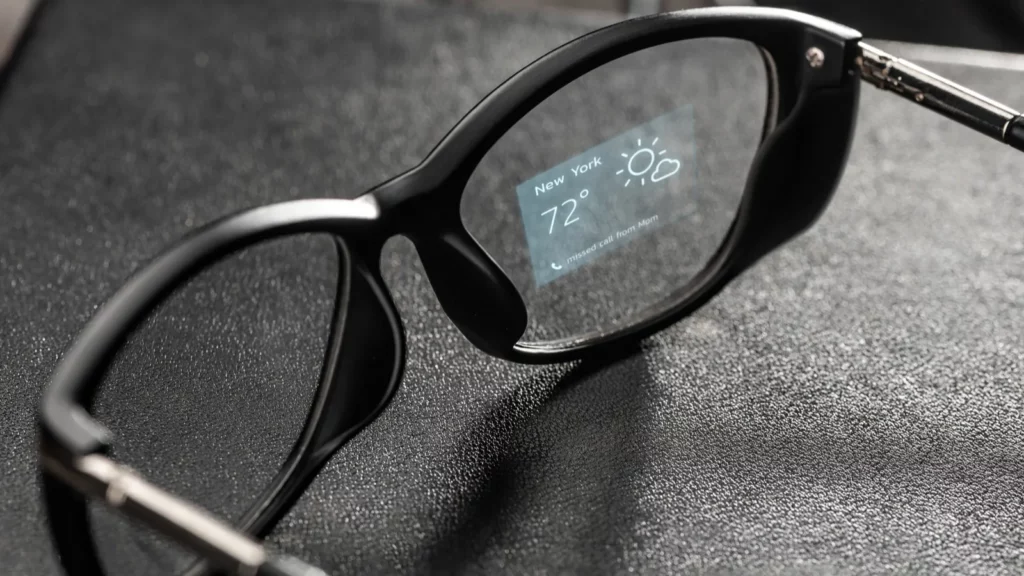
Imagine walking into a room and instantly seeing the names of everyone around you floating discreetly above their heads through a pair of stylish sunglasses. This futuristic vision, long a staple of science fiction, may be closer than ever.
According to recent reporting, Meta is exploring a facial recognition feature for its Ray-Ban smart glasses that could identify people in real time and display their names or basic profile details via an AI overlay. The feature, internally called “Name Tag,” reflects Meta’s ongoing push to transform its smart glasses from simple video-capture devices into full-fledged AI assistants.
While the technology is undeniably impressive, it also raises profound questions about privacy, ethics, and the limits of biometric surveillance in everyday life.
Curious how this could reshape the way we interact and protect our privacy? Dive deeper to explore the full implications of Meta’s Name Tag.
The reported feature
The concept behind Name Tag is straightforward but technically ambitious. Reporting indicates the system would capture a face, generate a numerical representation, and compare it to images linked with Meta profiles, with recognition limited to a user’s connections and some public accounts, rather than a universal database.
If a match is found, the wearer could see the person’s name and possibly other publicly shared information overlaid in their field of view. Meta insiders describe the idea as a “social memory aid,” a tool designed to prevent awkward moments like forgetting someone’s name at a conference or social gathering.
Reporting notes that Meta has considered accessibility use cases for Name Tag, such as helping people who are blind or have low vision by telling them who is nearby.
Meta’s Ray-Ban smart glasses already include cameras and microphones, but the addition of live facial recognition would require sophisticated on-device processing and tight integration with the company’s AI infrastructure, including its Llama language models.
Essentially, the glasses would act as the “eyes” of a broader AI ecosystem capable of identifying people and retrieving contextually relevant information.
Meta’s hardware roadmap
Facial recognition is just one piece of Meta’s broader smart glasses strategy. The company has steadily evolved its Ray-Ban partnership since the first camera-equipped glasses, which primarily focused on photo and video capture for Instagram and Facebook.
Later iterations introduced live-streaming and voice control, setting the stage for AI-driven enhancements like Name Tag.
Meta has been developing more advanced AR glasses known as Orion, previously codenamed “Project Nazare,” which aim to provide richer AR overlays than today’s Ray-Ban models. These devices are expected to offer richer overlays and deeper interaction with digital content in the wearer’s field of view.
Integrating facial recognition into this ecosystem would allow Llama-powered assistants to provide personalized information about social contacts, professional connections, and even contextual reminders, all in real time.
How the technology works
At a technical level, the proposed facial recognition feature leverages Meta’s existing identity infrastructure. When the glasses detect a face, they capture an image and transform it into a numerical encoding.
This encoding is then compared against the company’s database of images tied to user profiles. If the system identifies a match, the glasses display the corresponding name and optional details directly in the wearer’s vision.
While modern facial recognition models are highly accurate in controlled conditions, experts caution that real-world performance can vary.
Lighting, angles, partial occlusion, and demographic diversity can all affect reliability. Misidentifications could be socially awkward or worse; if applied beyond casual social settings, they could contribute to harmful surveillance practices.
Privacy and regulatory challenges
Meta’s plans for facial recognition do not exist in a vacuum. The company is already under strict privacy scrutiny.
In the U.S., Meta operates under a Federal Trade Commission consent decree that limits how it can collect and use biometric information. Violating these rules, particularly in a consumer-facing product that scans faces without explicit consent, could result in hefty fines and legal action.
International regulations further complicate matters. The European Union’s General Data Protection Regulation (GDPR) treats biometric identifiers as highly sensitive data, requiring explicit opt-in consent from anyone being scanned, not just the user of the device.
Deploying facial recognition globally would require Meta to implement complex consent mechanisms, regional feature switches, and technical safeguards to satisfy regulators and privacy advocates.
The stakes are particularly high when it comes to children. Experts warn that scanning minors could run afoul of the Children’s Online Privacy Protection Act (COPPA), which mandates parental consent before collecting or using the personal information of children under 13.
The glasses’ ability to capture and potentially store faces even momentarily could trigger legal and ethical concerns, particularly if the data is linked to broader Meta accounts or social media profiles.
Little‑known fact: European regulators have questioned whether the tiny LED indicator on Ray‑Ban Meta glasses is sufficient notice when recording, leading to adjustments like larger lights and blinking patterns.
Social and ethical considerations
The potential benefits for users are clear. Imagine a professional conference where attendees can instantly recall names and affiliations, or a social gathering where recognizing faces becomes effortless. Accessibility advocates also see promise: facial recognition could provide real-time assistance to people with visual impairments, enhancing independence in crowded or unfamiliar environments.
But there are broader societal implications. Normalizing real-time facial recognition in public spaces could erode the practical anonymity that people currently enjoy.
Privacy advocates warn that once these capabilities become mainstream, other entities, employers, landlords, and governments could adopt similar tools, creating pervasive surveillance ecosystems. Even well-intentioned features like Name Tag risk setting precedents that extend far beyond their intended use.
Little‑known fact: In 2024, two Harvard students used Ray‑Ban Meta glasses with a third‑party facial‑recognition service to identify strangers, confirming how easily the hardware can be repurposed for surveillance.
Legal and political context
Meta’s internal documents suggest that the company is conscious of the regulatory and reputational risks. Reports indicate that the launch of Name Tag has been timed to coincide with a period of political distraction, allowing the company to mitigate public backlash while fine-tuning safeguards.
However, uncertainty remains regarding how Meta plans to manage consent for non-users or individuals outside its ecosystem.
Without robust opt-out mechanisms, critics argue that the glasses could create a de facto biometric database of the public. The intersection of facial recognition and child safety adds another layer of complexity. Current COPPA standards are nearly 30 years old and were not designed with ubiquitous AI surveillance in mind.
Lawmakers have introduced updates, such as the Kids Online Safety Act (KOSA), to extend protections to minors up to age 18, including requirements for default privacy settings, parental controls, and mitigation of online harms.
Several U.S. states have moved toward COPPA-style rules for minors’ data; Arkansas passed a Social Media Safety Act requiring parental consent for under-18 social media accounts, while other states (e.g., New Hampshire and New Jersey) have laws restricting processing of minors’ data for targeted advertising.
Brand implications
Ray-Ban and Oakley are both owned by EssilorLuxottica, a dominant eyewear group that controls roughly 20–25% of the global eyewear market, so privacy controversies could carry significant reputational and commercial risk.
Both brands have cultivated positive consumer perceptions over decades, and producing a device that could violate privacy laws or attract public outrage might undermine that reputation.
A history of privacy issues
Meta has faced major privacy and biometric actions, including a $5 billion FTC settlement in 2019 over broad privacy violations that imposed new limits on facial recognition, a $650 million settlement in Illinois over its photo-tagging facial recognition under that state’s Biometric Information Privacy Act (BIPA), and a $1.4 billion settlement with Texas over alleged misuse of facial recognition data.
These precedents suggest that any mismanagement of Name Tag could result in severe financial and regulatory consequences.
What’s next?
At this stage, Meta has not publicly confirmed the rollout of Name Tag, and the feature appears to remain in exploratory stages. Sources indicate that the company originally considered testing the feature with visually impaired users before broader release, but ultimately held back due to safety, ethical, and technical concerns.
Any eventual launch will likely involve new hardware iterations and carefully designed consent flows. For now, the prospect of real-time facial recognition on consumer smart glasses sits at the intersection of technological innovation and societal debate.
On one hand, it promises convenience, accessibility, and a glimpse of a truly augmented social experience. On the other hand, it raises urgent questions about privacy, consent, and the limits of personal freedom in a world where faces can be scanned and identified instantly.
TL;DR
- Meta is working on a facial recognition feature called “Name Tag” for its Ray-Ban smart glasses that would identify people in real time and show their names or profile details via its AI assistant.
- The system would match faces against images tied to Meta profiles, likely limited to a user’s contacts and some public accounts, turning the glasses into a “social memory” tool that helps remember names and context at events or in daily life.
- Building Name Tag requires combining on-device sensing with Meta’s Llama-based AI stack, extending the company’s Ray-Ban hardware roadmap from simple photo/video capture to full AI-assistant behavior and, eventually, more advanced AR glasses like Orion.
- The feature faces major privacy and legal hurdles: Meta is under an FTC consent order, GDPR treats biometric identifiers as sensitive “special category” data, and U.S. child-privacy rules such as COPPA (plus proposed laws like KOSA and various state efforts) tightly restrict how minors’ data can be collected and used.
- European regulators have already questioned whether Ray-Ban Meta’s recording LED is adequate notice, and past privacy controversies, multimillion/billion-dollar biometric settlements, and EssilorLuxottica’s huge eyewear footprint mean any misstep could be costly for both Meta and its partners.
- Real-world experiments show how easily the hardware can be turned into a surveillance tool—for example, Harvard students using Ray-Ban Meta glasses plus third-party facial recognition to identify strangers, fueling fears of pervasive, real-time doxxing.
- As of now, Name Tag hasn’t launched publicly; Meta is still “thinking through options,” and any release will likely depend on new safeguards, consent flows, and region-specific switches to balance convenience and accessibility against privacy, ethics, and regulatory risk.
This article was made with AI assistance and human editing.
If you liked this, you might also like:
Trending Products

iRobot Roomba Plus 405 (G181) 2in1 ...

Tipdiy Robot Vacuum and Mop Combo,4...

iRobot Roomba 104 2in1 Vacuum &...

Tikom Robot Vacuum and Mop Cleaner ...

ILIFE Robot Vacuum

T2280+T2108

ILIFE V5s Pro Robot Vacuum and Mop ...

T2353111-T2126121

Lefant Robot Vacuum Cleaner M210, W...