
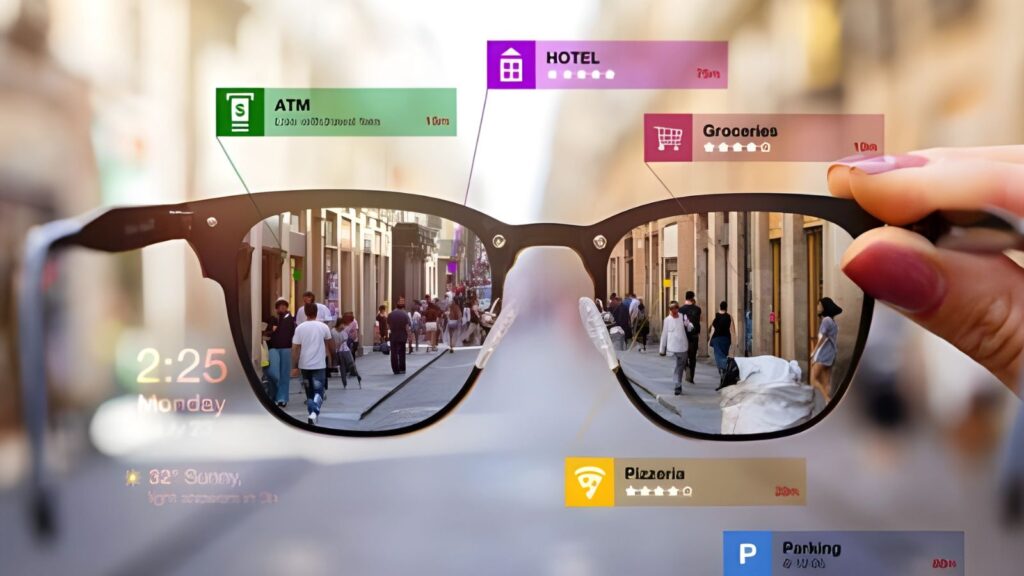
Meta’s smart glasses are designed to make artificial intelligence feel like a natural part of everyday life, giving users hands-free access to digital assistance, photo and video capture, and real-time interactions through a wearable device.
As AI glasses become more common, companies are exploring new ways to make these devices more useful. Still, they are also facing growing questions about privacy and the boundaries of always-on technology.
A recent discovery in the Meta AI app has sparked fresh concerns after WIRED reported hidden NameTag facial recognition code that could identify people captured by Meta’s smart glasses. The code suggests Meta explored technology that could match faces with stored biometric information, although the feature is not currently active.
What did WIRED discover inside Meta’s AI app?
WIRED found unreleased facial recognition code inside the Meta AI companion app, which WIRED said had been downloaded more than 50 million times. The feature, internally called NameTag, was not enabled for users, but WIRED reported that core components had been added across app updates as early as January 2026.
The discovery suggested Meta had shipped facial recognition components while publicly saying it was still thinking through how the technology could be used responsibly. The code was designed for Meta’s smart glasses platform, including Ray-Ban Meta and Oakley models.
After WIRED’s report, Meta removed most of the related code from the Meta AI app. Meta said the feature was exploratory, that no final decision had been made, and that it was not building a central face database.
How would Meta NameTag facial recognition work?
NameTag was designed to connect smart glasses cameras with artificial intelligence processing on a connected smartphone. The system could detect faces, crop images, and convert them into unique biometric signatures called faceprints.
Each faceprint would be stored locally on the user’s phone as a biometric signature. The glasses would capture faces, send the information to the phone, and compare it against stored data to identify possible matches.
If activated, recognized people could trigger notifications for the glasses wearer. Unrecognized faces could reportedly be cropped, indexed, and stored in a pending folder for possible future processing or identification.
Little-known fact: Meta’s NameTag system uses three separate AI models, one to detect faces, one to crop them, and one to encode them into biometric faceprints stored on the phone.
Why is facial recognition on glasses controversial?
The biggest concern is the bystander problem. Unlike traditional facial recognition systems that require users to upload photos or participate voluntarily, smart glasses could identify strangers simply while someone is walking nearby.
Privacy advocates argue that real-time identification could create risks involving stalking, harassment, and unwanted tracking. A person wearing AI-powered glasses could potentially gather information about people who never agreed to participate.
The concern is amplified because smart glasses are designed to look similar to regular eyewear. While current Meta glasses include cameras and recording indicators, critics argue that public awareness of wearable cameras remains limited.

How does NameTag compare with Meta’s previous facial recognition?
Meta previously operated a large-scale facial recognition system on Facebook that created faceprints for more than 1 billion users. The company ended that program in 2021 after major privacy criticism and deleted stored faceprints.
NameTag would have worked differently because biometric data would be stored on individual phones rather than a central Meta database. The company emphasized that it was not creating a massive corporate collection of facial information.
However, critics argue that local storage does not remove all privacy concerns. Consumer facial recognition tools can still create risks if users identify people without permission or combine results with outside information sources.
Little-known fact: Meta’s Texas facial recognition settlement of $1.4 billion in 2024 was the largest privacy settlement ever obtained by a single U.S. state attorney general, dwarfing a prior $391.5 million Google settlement by 40 states combined.
What happened after the discovery?
WIRED reported its findings on June 4, 2026, after analyzing the Meta AI app’s software. The report showed that NameTag components were present in live software even though the feature had not been publicly enabled.
In a June 8 follow-up, WIRED reported that the latest version of the Meta AI app had removed the unactivated NameTag components. Meta said the feature was exploratory and that no final decision had been made, but the removal did not end broader concerns about how wearable AI systems may handle sensitive information.
Little-known fact: An internal Meta memo cited by The New York Times said the company considered launching NameTag during a “dynamic political environment” when many civil society groups would have their resources focused on other concerns.
What risks have previous smart glasses tests revealed?
Privacy concerns around smart glasses are not new. In 2024, two Harvard students demonstrated how camera-equipped Meta Ray-Bans could be combined with external facial recognition tools to identify strangers.
The students used the glasses and additional technology to discover personal information, including names, home addresses and phone numbers. The experiment showed how wearable cameras could become powerful data collection tools.
Although the demonstration relied on external systems rather than Meta’s NameTag feature, it highlighted the challenge of controlling what users can do with AI-powered devices after purchase.
How does this affect smart home and AI users?
Smart home enthusiasts are increasingly adopting devices with cameras, microphones, and artificial intelligence. Meta’s NameTag controversy shows that privacy considerations are becoming just as important as convenience when evaluating connected technology.
Future wearable AI devices could interact with smart homes through voice controls, cameras, and automation systems. However, users may need to understand what data devices collect, where information is stored, and who can access it.
For consumers, privacy settings and policies may not provide the full picture. Camera-equipped devices create concerns not only for owners but also for people captured nearby who have no control over the technology.
What does this mean for the future of wearable AI?
The NameTag controversy highlights the growing tension between useful AI features and public privacy expectations. Facial recognition could provide helpful functions, such as remembering names or assisting users with accessibility needs.
At the same time, widespread consumer facial recognition could change how people experience public spaces. The ability to identify strangers instantly raises questions about consent, surveillance, and personal security.
Meta’s decision to remove NameTag does not end the discussion. As companies continue developing AI glasses and wearable assistants, similar debates will likely shape how these products are designed and regulated.
Are Meta smart glasses still useful without facial recognition?
Current Meta smart glasses continue offering features such as cameras, Meta AI assistance, and voice controls. Users can capture photos, record videos, ask questions, and interact with artificial intelligence without NameTag.
The controversy does not remove the broader appeal of AI-powered eyewear. These devices represent a major step toward more natural interactions with technology, especially as artificial intelligence becomes integrated into everyday environments.
For smart home users, the incident serves as a reminder that convenience should be balanced with privacy awareness. Connected devices can offer powerful capabilities, but understanding their data practices remains essential.
TL;DR
- Meta removed the hidden NameTag facial recognition code after WIRED uncovered the technology inside the Meta AI companion app linked to its smart glasses.
- NameTag was designed to create biometric faceprints stored on a user’s phone, potentially allowing people captured through Meta smart glasses cameras to be identified.
- Privacy advocates raised concerns that wearable facial recognition could enable people to be recognized without their knowledge or consent in everyday situations.
- Meta said it is not creating a centralized facial recognition database and removed the code after questions about the feature’s purpose and privacy implications.
- The controversy reflects growing concerns about how AI-powered wearables and connected devices should balance convenience, innovation, and personal privacy.
This article was made with AI assistance and human editing.
If you liked this, you might also like:
Trending Products

iRobot Roomba Plus 405 (G181) 2in1 ...

Tipdiy Robot Vacuum and Mop Combo,4...

iRobot Roomba 104 2in1 Vacuum &...

Tikom Robot Vacuum and Mop Cleaner ...

ILIFE Robot Vacuum

T2280+T2108

ILIFE V5s Pro Robot Vacuum and Mop ...

T2353111-T2126121

Lefant Robot Vacuum Cleaner M210, W...