
Imagine asking Siri what a street sign says without reaching for an iPhone. Apple’s rumored smart glasses could eventually make that possible. Reports describe a device with speakers and microphones, while cameras remain part of Apple’s current testing and privacy debate.
The glasses are not expected to resemble an augmented-reality headset. Current reporting points toward ordinary-looking frames without an in-lens display. The iPhone is expected to play an important role in connectivity and processing.
That approach could give Apple a new way to make Siri useful outside the phone. If Apple ships cameras, they could provide visual information to Siri and Apple Intelligence. Siri could then respond through the glasses while users keep moving.
Apple’s glasses are built for AI
Apple’s first smart glasses are reportedly being designed as AI wearables rather than smaller versions of Vision Pro. Reports describe normal-looking frames in several styles, with the first generation expected to have no in-lens display.
The project is internally known as N50, while Apple is reportedly developing hardware designed for an everyday wearable. However, detailed chip architecture and specifications have not been publicly confirmed.
Earlier reports described two cameras: a higher-resolution camera for photos and video, and a second camera for visual input and gestures. More recent reporting says Apple is still weighing whether the final product will include cameras, so those details remain unconfirmed.
How would Siri work without screens?
The glasses could eventually give Siri access to visual context without requiring users to hold up an iPhone. Earlier reports described cameras feeding visual information to Siri and Apple Intelligence, while the latest reports say Apple is still deciding whether to include cameras and what they will be allowed to do.
Potential uses could include understanding objects, signs, and surroundings, as well as providing hands-free assistance. Reports have also linked the glasses to Siri, calls, music, and notifications.
Navigation is another reported possibility. Earlier reporting suggested that the cameras could provide turn-by-turn walking directions. However, specific capabilities such as plant identification, business-card reading, translation, and creating calendar events directly from what the glasses see have not been firmly established.
Privacy could shape the experience
Privacy appears to be a major consideration in Apple’s smart-glasses development, particularly because camera-equipped eyewear can capture people nearby. Recent reporting says Apple is developing new hardware and software privacy measures and is considering several approaches to cameras.
Apple is reportedly considering glasses that include cameras for AI functions but restrict photo and video recording, while another prototype has no cameras at all. Reports also indicate that Apple intends to avoid facial recognition and emphasize on-device processing.
The company has not publicly confirmed a final camera system or specific recording indicator. Those details remain part of the reported development process as Apple works toward a late-2027 release.
When could Apple’s glasses arrive?
The expected timeline has moved as reports about the project have changed. Earlier reporting pointed toward a possible 2026 introduction, but the latest reports say Apple is now targeting a reveal at the Worldwide Developers Conference in June 2027, with customer availability expected by the end of 2027.
The delay has been linked to Apple’s efforts to improve the glasses and address privacy concerns. The device is also closely connected to Apple’s broader AI and Siri strategy.
For consumers, late 2027 is the latest reported target, not a confirmed launch date. Apple has not officially announced the glasses, and the final hardware, features, and release schedule could change.
Apple and Meta are taking different paths
Meta’s Ray-Ban smart glasses show how camera-equipped eyewear can provide AI and hands-free features without a traditional AR headset. Apple’s rumored product would enter a market where Meta already has established camera-equipped smart glasses.
One major reported difference is the display. Apple’s first-generation glasses are not expected to include an in-lens display, while Meta has introduced a Ray-Ban Display model with a small visual display.
Earlier reports described Apple’s glasses as having two cameras, including separate roles for image capture and computer vision. However, more recent reporting says Apple is still considering several camera configurations, so the final arrangement remains unknown.
What could make the glasses useful?
Apple’s strongest advantage may be integration rather than one headline feature. Because the glasses should work closely with an iPhone, Siri could connect visual information with calendars, reminders, messages and navigation. Those services already sit inside Apple’s ecosystem.
That could make small interactions feel more natural. Instead of stopping to photograph a menu or copy an address, users could ask Siri about something they can see. They could receive an answer while continuing to walk, shop, or work.
The glasses are also reportedly part of a broader Apple strategy involving other AI wearables. An AI pin or pendant and camera-equipped AirPods have been reported as parallel projects. Together, these devices suggest Apple is exploring more ways to move AI beyond screens.
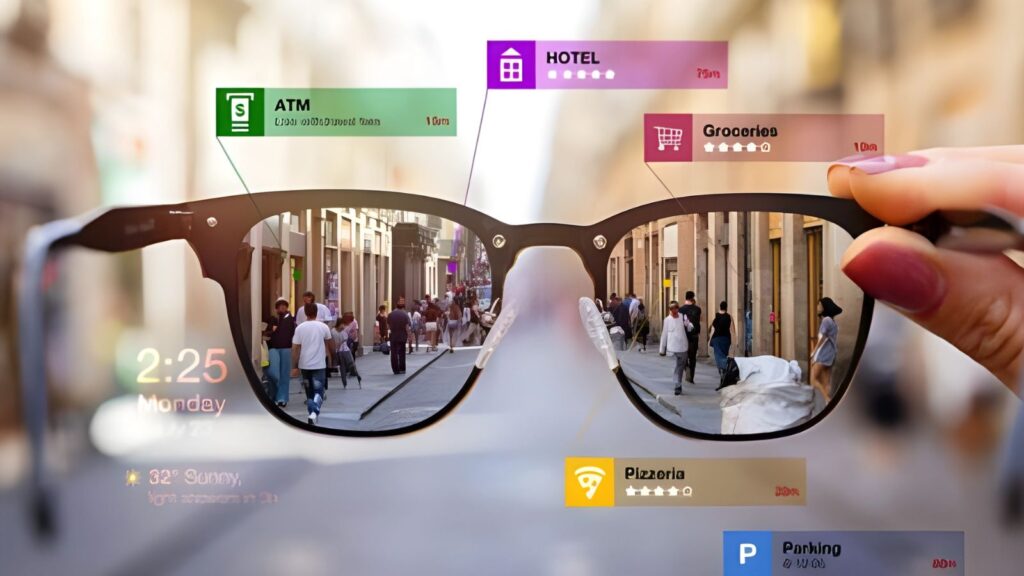
The iPhone would remain central
The rumored glasses are not expected to replace the iPhone. Reports describe a device designed to work closely with the iPhone and Apple Intelligence, although the exact division of processing and connectivity between the glasses and phone has not been publicly confirmed.
The glasses are expected to provide audio and hands-free interaction, while the iPhone would remain an important part of the wider Apple ecosystem. Earlier reporting has described the glasses as an iPhone-connected accessory rather than a completely independent computer.
That relationship could help Apple balance functionality, size, and battery demands. However, Apple has not confirmed the final hardware architecture, battery capacity, or performance.
A bigger bet on everyday AI
The shift toward lightweight glasses suggests Apple may be looking beyond the display-heavy approach represented by Vision Pro. Instead of placing a computer display in front of users, the rumored glasses would focus on audio, Siri and AI-assisted interaction with the physical world.
That distinction could eventually matter for smart-home users as well as people on the move. Visual AI could potentially help users understand objects or surroundings, but Apple has not confirmed specific smart-home functions for the glasses.
For now, the product remains unannounced, and many reported specifications could change before launch. Current reporting points to speakers, microphones, Siri integration, and a strong focus on privacy, while the final camera configuration remains undecided.
Little-known fact: Display-less smart glasses shipped 2.25 million units in just the first quarter of 2026, a 167% jump from a year earlier.
TL;DR
- Apple’s rumored smart glasses are expected to use speakers and microphones without an in-lens display, while the final camera configuration remains undecided.
- Siri could gain access to visual context through the glasses if Apple ships a camera-equipped version, allowing potential hands-free assistance with objects and surroundings.
- Privacy is reportedly a major focus, with Apple considering camera restrictions, on-device processing, and other protections against unwanted recording.
- Current reporting points to a WWDC 2027 unveiling and late-2027 availability, although Apple has not confirmed the product or its launch schedule.
- Meta already sells camera-equipped smart glasses, giving Apple an established competitor as it develops its own AI-focused eyewear.
This article was made with AI assistance and human editing.
If you liked this, you might also like:
Trending Products

iRobot Roomba Plus 405 (G181) 2in1 ...

Tipdiy Robot Vacuum and Mop Combo,4...

iRobot Roomba 104 2in1 Vacuum &...

Tikom Robot Vacuum and Mop Cleaner ...

ILIFE Robot Vacuum

T2280+T2108

ILIFE V5s Pro Robot Vacuum and Mop ...

T2353111-T2126121

Lefant Robot Vacuum Cleaner M210, W...