
Apple’s future smart glasses could eventually turn a familiar piece of eyewear into a new kind of fitness tracker. The first version is not expected to do that, however.
Apple is reportedly developing non-AR smart glasses that connect to an iPhone and focus on cameras, audio, Siri, and AI. The longer-term plan could bring health tracking and workout coaching to the face.
That approach would give Apple another way to collect movement data while expanding its health ecosystem beyond the wrist. It could also make lightweight glasses more useful during workouts than a bulky headset.
Apple’s glasses will start without displays
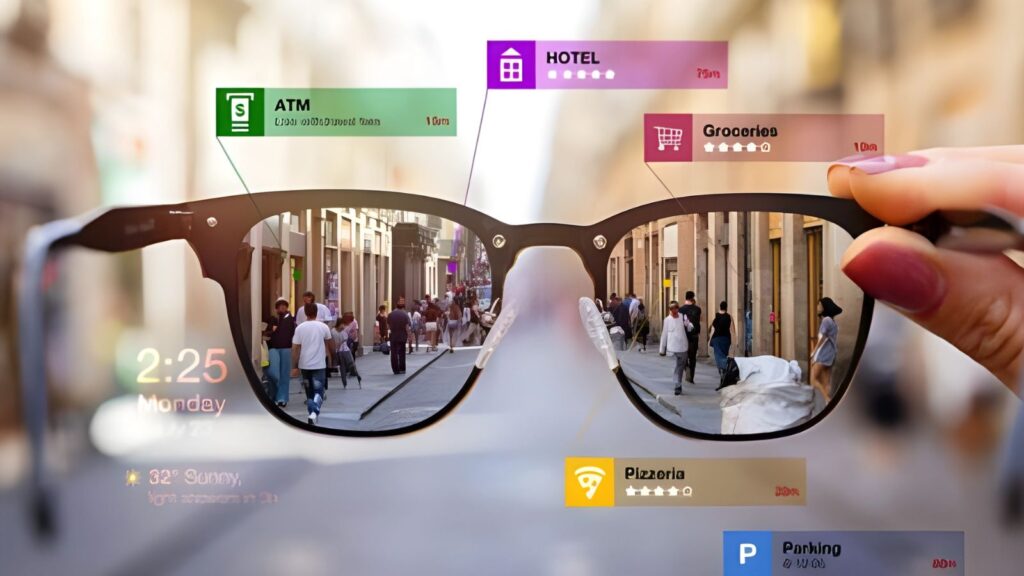
The first-generation glasses are expected to look more like ordinary eyewear than an augmented reality headset. They reportedly will not have displays built into the lenses.
Instead, the glasses are expected to use cameras, microphones, speakers, and motion sensors while remaining tethered to an iPhone. Their focus will reportedly be on AI assistance, Siri, photography, video, and notifications rather than visual overlays.
That distinction matters because Apple’s fitness ambitions appear to extend beyond what the launch hardware can offer. The company could build the foundation first, then add more sophisticated health capabilities through later generations.
How could glasses track fitness?
Cameras could give Apple’s glasses a perspective that wrist-worn devices cannot easily provide. They could observe body movement while sensors inside the frames monitor head and upper-body motion.
Reported hardware plans include dual outward-facing cameras, accelerometers, and gyroscopes. Later models could add optical or contact sensors capable of measuring heart rate and other biometric data.
That combination could help the glasses understand exercises such as yoga, strength training, and cardio. Instead of simply counting activity, the system could potentially analyze movement and provide more useful feedback.
Apple could make workouts more interactive
Apple’s broader vision reportedly involves using the glasses as a health and fitness companion alongside Apple Watch and AirPods. The glasses would complement those products rather than immediately replace them.
Audio coaching could become one of the most practical applications. The glasses could provide spoken guidance, movement feedback, and workout prompts without requiring users to look down at a watch during exercise.
That concept resembles Apple’s Workout Buddy experience, but with an important difference. Cameras could help the system assess exercise form and movement quality, rather than relying primarily on wrist-based measurements.
What role will Apple Intelligence play?
On-device processing could be central to the experience. Reports point to a custom Apple silicon chip that could handle vision models and movement analysis locally.
Siri and Apple Intelligence could then provide contextual coaching based on what the glasses detect. Processing sensitive information locally could also support Apple’s existing emphasis on privacy for health-related data.
The glasses could send workout data to HealthKit and the Health app. That would allow activity data to sit alongside information already collected through Apple Watch and iPhone.
Fitness features may take several years
The biggest catch is timing, because the first glasses are not expected to arrive as part of a complete fitness platform. Current reporting points toward an initial release focused on core smart-glasses functions.
The glasses are expected to be unveiled around WWDC 2027 and could ship later that year. Some earlier reports suggested 2026, but more recent reporting points toward 2027.
More advanced health capabilities are expected to appear gradually in later generations. The second generation could be the point at which richer biometric sensing and deeper workout coaching become more realistic.
Health tracking could become Apple’s differentiator
Apple would enter a crowded smart-glasses market where companies are already pursuing cameras, AI assistants, and displays. Its strongest advantage may instead be the ecosystem surrounding its hardware.
HealthKit, Apple Fitness+, Apple Watch, and AirPods could give Apple a ready-made foundation. The glasses could become another sensor platform that feeds information into services users already understand.
That strategy also fits Apple’s history with wearables. The company can introduce a basic device first, then expand its capabilities as sensors, software, and user habits mature.
Vision Pro helped shape this direction
Apple’s fitness ambitions for glasses reportedly connect to earlier ideas developed for Vision Pro. The company explored immersive Fitness+ experiences that could track a user’s body during workouts.
Vision Pro’s weight and technical limitations made serious exercise difficult, limiting the practicality of that approach. Lightweight glasses could solve part of the problem by making wearable fitness technology easier to use while moving.
The change, therefore, represents more than a smaller headset. Apple’s engineers could be moving the fitness experience toward hardware that people can comfortably wear during everyday activities.
Little-known fact: The updated Vision Pro (M5) weighs roughly 750–800 grams, noticeably more than the M2 model at roughly 650 grams.
The hardware still has major questions
The first-generation glasses are expected to include dual cameras, speakers, microphones, and motion sensors. Reports also point to multiple acetate frame styles designed to resemble conventional glasses.
There reportedly will be no display in the first generation, while connectivity will depend on an iPhone. Price estimates range from roughly $200 to $500, although Apple has not officially confirmed those details.
Battery life is another unresolved area, as Apple’s target reportedly is all-day casual use. Exact battery capacity and charging details remain unknown, leaving important questions about longer workout sessions.
Privacy could determine the glasses’ success
Camera-equipped glasses create a different privacy challenge from traditional fitness trackers. People may be comfortable wearing a watch in public, but recording-capable eyewear can make bystanders more cautious.
Apple is reportedly considering how recording indicators and permissions should work. The company will need to make those safeguards obvious enough to reassure users without making the glasses difficult to operate.
Health data creates another layer of responsibility. If future models collect heart rate or other biometric data, users will expect strong controls over how that information is processed and shared.
Apple faces strong smart-glasses competition
Apple’s approach would differ from that of products such as Meta’s Ray-Ban glasses and Xreal’s AR hardware. Some competitors already offer displays, while Apple’s first model is expected to remain display-free.
That could make Apple’s product less impressive on paper at launch. Its potential advantage would instead come from Siri, Apple Intelligence, HealthKit, and deeper integration with existing Apple devices.
The company would also have to prove that its cameras and motion sensors can provide meaningful fitness insights. Consumers may not see much value if the glasses simply duplicate information their Apple Watch already captures.
TL;DR
- Apple’s first smart glasses are expected to focus on cameras, audio, Siri, and AI rather than built-in displays or full fitness tracking.
- Future generations could use cameras, motion sensors, and biometric hardware to analyze workouts and provide hands-free coaching.
- Health features are reportedly planned as a longer-term strategy, with more comprehensive capabilities likely arriving after the first generation.
- Apple’s biggest advantage could come from combining smart glasses with HealthKit, Apple Fitness+, Apple Watch, and AirPods.
- Privacy will remain a major challenge because camera-equipped glasses could raise concerns about recording people and handling sensitive health information.
This article was made with AI assistance and human editing.
If you liked this, you might also like:
Trending Products

iRobot Roomba Plus 405 (G181) 2in1 ...

Tipdiy Robot Vacuum and Mop Combo,4...

iRobot Roomba 104 2in1 Vacuum &...

Tikom Robot Vacuum and Mop Cleaner ...

ILIFE Robot Vacuum

T2280+T2108

ILIFE V5s Pro Robot Vacuum and Mop ...

T2353111-T2126121

Lefant Robot Vacuum Cleaner M210, W...