
For years, “3D” has been one of tech’s most overpromised ideas. From early 3D TVs to clunky movie theater glasses, the promise of depth and immersion often came with compromises, eye strain, lower image quality, or gimmicks that wore off fast.
That’s why XReal’s latest smart glasses feel different. Instead of asking developers to rebuild content for 3D, XReal is attempting something far more ambitious: turning ordinary screens into convincing spatial experiences using on-device processing.
At CES, XReal unveiled two new AR smart glasses and a surprisingly practical accessory that together signal a shift in how personal displays might evolve.
The headline feature is called Real 3D, and while it’s not perfect, it’s the first time automatic 3D conversion feels genuinely usable, especially for gaming.
If you’re curious how this technology works in real-world use and where it genuinely shines versus where it still struggles, keep reading to explore what XReal’s latest glasses get right, and what they’re still figuring out.
A new generation of display glasses arrives
The star of the announcement is the XReal 1S, a follow-up to last year’s XReal One. At first glance, it looks familiar.
The design language hasn’t changed much, and the glasses still rely on micro-OLED “birdbath” displays that reflect images into your field of view using half-mirrored prisms. But under the hood, the 1S introduces new processing tricks that fundamentally change how content feels.
Alongside it, XReal revealed a surprise collaboration with Asus: the ROG XReal R1, aimed squarely at PC gamers. While the R1 skips Real 3D entirely, it pushes refresh rates to a claimed 240Hz, a first for AR smart glasses, and leans into performance rather than experimentation.
Together, these products show XReal splitting its lineup into two philosophies: one focused on immersive spatial effects, the other on raw gaming performance.
What Real 3D actually does
Real 3D is XReal’s attempt to solve a long-standing problem: how to add depth to content that was never designed for it. Instead of relying on native stereoscopic rendering, the glasses analyze incoming video in real time, estimate depth, and generate a layered 3D effect dynamically.
In practice, this works best with video games. During testing, games like Mario Kart World and Yooka-Replaylee gained a noticeable sense of depth, as if the screen had turned into a miniature stage.
Even 2D titles such as Hollow Knight: Silksong and Rogue Legacy 2 benefited, with foreground elements subtly popping forward while backgrounds receded, creating a diorama-like effect.
What makes this impressive is that none of these games were designed for 3D displays. The processing happens entirely inside the glasses, using XReal’s onboard chipset.
Where the illusion starts to crack
That said, Real 3D is far from flawless. While games feel enhanced, video content is hit or miss. Watching a show like Fallout reveals the limits of automatic depth estimation. Some scenes gain subtle layering, but others look confused, especially shots with dramatic lighting contrasts.
In one instance, a foreground character was incorrectly treated as background, making the image feel inverted and disorienting. These moments break immersion and remind you that the system is guessing, not truly understanding the scene.
Performance is another issue. Real 3D processing noticeably reduces frame rate, introducing stutter and flicker. After about 10 minutes, the combination of lower sharpness, processing artifacts, and constant depth shifts can lead to eye fatigue or headaches, particularly for users sensitive to 3D visuals.
Still, there’s clear progress. Compared to earlier demos, the current implementation is smoother, suggesting XReal is actively refining the system through firmware updates.
Display quality still matters, and it delivers
Outside of Real 3D, the XReal 1S feels reassuringly mature. It offers 700 nits of peak brightness, solid color reproduction, and a 52-degree field of view, slightly wider than the original XReal One but narrower than the One Pro.
Resolution also gets a quiet upgrade, moving to a 16:10 aspect ratio with sharper vertical detail, an underrated improvement that better suits gaming and productivity. Text looks cleaner, UI elements feel less cramped, and games scale more naturally.
In standard 2D mode, the image is crisp and comfortable for extended use, which is important because many users will likely toggle Real 3D on selectively rather than using it all the time.
The missing link for Nintendo Switch users
One of the most practical announcements wasn’t a pair of glasses at all. It was the XReal Neo, a compact battery dock and video adapter that finally makes XReal glasses usable with the Nintendo Switch and Switch 2.
Nintendo’s hardware doesn’t support smart glasses natively, and its single USB-C port creates charging headaches. The Neo solves this by acting as a middleman: it converts video output, supplies power passthrough, and includes a 10,000-mAh battery to keep everything running.
Compared to competing docks from Viture and RayNeo, the Neo is significantly smaller and less bulky. Instead of snapping onto the console with plastic brackets, it uses a magnetic attachment system with stick-on metal rings. It’s not as secure, but it’s far more portable and more flexible across devices.
For handheld gaming on planes or long trips, the Neo turns the XReal 1S into a private, floating theater that feels surprisingly natural once set up.
The Asus ROG XReal R1 takes a different path
While the 1S experiments with spatial depth, the ROG XReal R1 is all about speed. With a claimed 240Hz refresh rate and a 57-degree field of view, it targets PC gamers who value smooth motion over visual tricks.
The R1 uses the same X1 spatial processor and includes built-in 3DOF motion tracking, allowing virtual screens to stay anchored in space as you move your head. It also introduces electrochromic lenses that automatically adjust tint based on ambient light, an underappreciated quality-of-life feature.
What it doesn’t include is Real 3D or ultrawide modes. That omission feels intentional. Asus and XReal appear to be betting that competitive gamers want consistency, clarity, and high frame rates above all else.
Pricing that reshapes the lineup
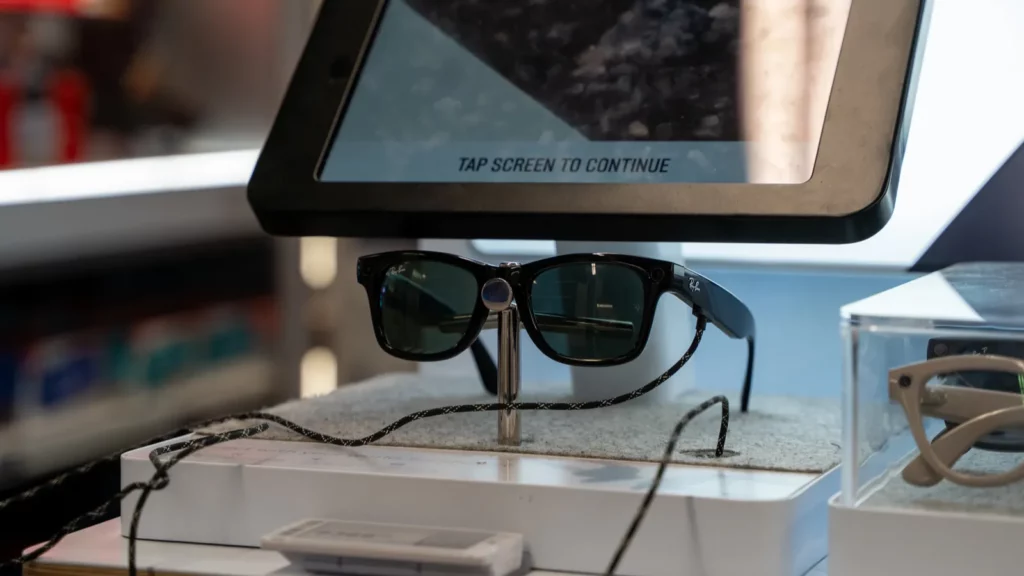
Perhaps the most surprising part of XReal’s announcement is pricing. The XReal 1S launches at $449, undercutting both the original XReal One and the One Pro. The Neo dock comes in at $99, making the overall ecosystem more accessible than before.
The ROG XReal R1 is expected in the first half of 2026, though pricing hasn’t been announced yet. Given its niche focus, it will likely sit at the premium end of the lineup.
Why does this moment feel different for smart glasses
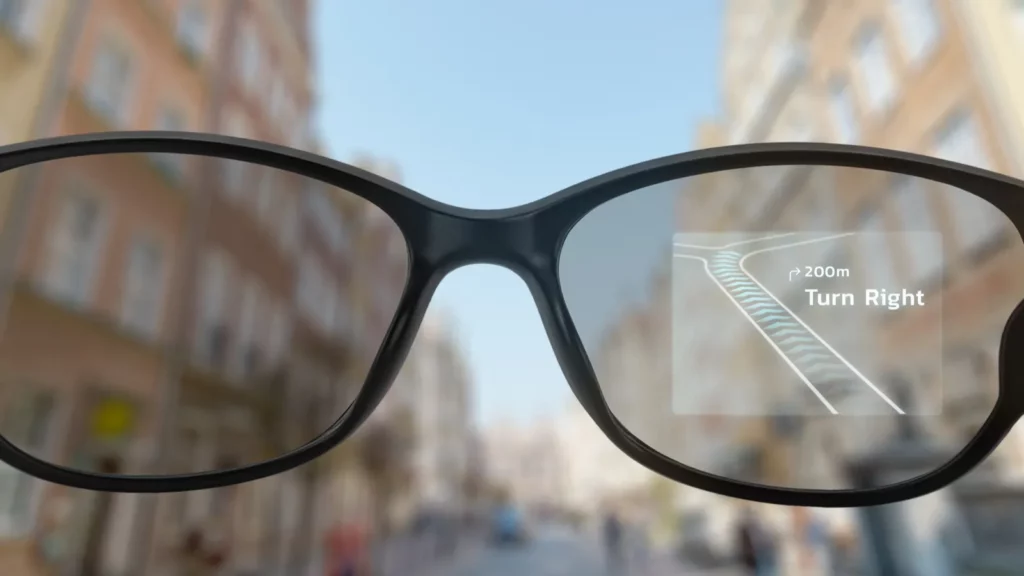
Smart glasses are evolving fast, but XReal’s approach stands out because it’s pragmatic. Instead of promising full AR worlds or replacing smartphones, these glasses focus on something simpler and more achievable: making screens more personal, more immersive, and more flexible.
Real 3D isn’t ready to replace native 3D rendering, and it probably never will. But it doesn’t need to. Its real value lies in moments, specific games, specific scenes where depth adds emotional weight without demanding extra effort from developers or users.
Just as importantly, XReal hasn’t bet everything on one idea. If Real 3D isn’t for you, the 1S still works beautifully as a high-quality virtual display. And if you want performance above all else, the R1 offers a different path entirely.
Where are we heading next?
XReal’s newest glasses don’t mark the end of the journey; they mark a turning point. Automatic 3D conversion still needs refinement, especially around performance and visual artifacts. But the foundation is there, and firmware updates could dramatically improve the experience over time.
More importantly, these products suggest a future where personal displays adapt to content rather than the other way around. Screens that feel less like rectangles and more like spaces. Glasses that don’t demand new ecosystems, but quietly enhance the ones we already use.
If you’ve ever wanted a portable screen that feels bigger than it should or wondered whether 3D could finally make sense again, XReal’s latest generation is the clearest sign yet that this category is growing up.
Recommended:
This article was made with AI assistance and human editing.
Trending Products

iRobot Roomba Plus 405 (G181) 2in1 ...

Tipdiy Robot Vacuum and Mop Combo,4...

iRobot Roomba 104 2in1 Vacuum &...

Tikom Robot Vacuum and Mop Cleaner ...

ILIFE Robot Vacuum

T2280+T2108

ILIFE V5s Pro Robot Vacuum and Mop ...

T2353111-T2126121

Lefant Robot Vacuum Cleaner M210, W...