
For more than a decade, augmented reality glasses have promised a future where information lives effortlessly in our field of view. Directions, translations, reminders, and notes were supposed to float naturally in front of our eyes, enhancing daily life without pulling us away from the real world.
Instead, most AR glasses have struggled with the same problem: they work in demos, but fall apart in everyday use. The issue has never been a lack of ambition. It has been comfort, readability, and cognitive overload.
AR glasses often demand too much from the user, forcing awkward eye movements, distracting overlays, short battery life, or bulky designs that make wearing them in public feel unnatural. XGIMI’s new MemoMind AI glasses aim to tackle that problem head-on, not by adding more features, but by fixing the fundamentals that have held AR back.
Keep reading to see how MemoMind is redefining wearable AR and why it could be the first pair of smart glasses you’ll actually want to wear every day.
Why AR glasses keep failing at daily use
The recent resurgence of smart glasses, fueled by Meta’s partnership with Ray-Ban and followed by smaller players like Rokid and L’Attitude, has brought AR back into the spotlight.
Cameras, voice assistants, and lightweight frames have improved the category, and some early and enterprise AR glasses use a single-eye (monocular) display, though many newer consumer AR glasses now use binocular displays or no display at all.
Reading text with one eye while the other focuses on the real world forces the brain to constantly reconcile two competing inputs. Over time, this leads to discomfort, loss of focus, and fatigue. Many users do not consciously notice the problem at first, but after extended use, it becomes the reason the glasses end up in a drawer. XGIMI’s MemoMind glasses are designed specifically to solve that problem.
Little‑known fact: A primary reason AR and near-eye displays cause eye strain and visual discomfort is the vergence–accommodation conflict when the eyes’ focusing distance doesn’t match the perceived distance of virtual content, forcing continuous visual adjustment and leading to fatigue and discomfort.
A design-first approach from an unlikely player
XGIMI is best known for its projectors, not wearables. But that background may actually explain why its approach feels different.
Unlike many brands that rely on off-the-shelf components, XGIMI designs its hardware end-to-end, including optics. That same philosophy carries over to MemoMind, a new AI glasses brand quietly introduced ahead of CES 2026.
Rather than leading with cameras or flashy recording features, MemoMind starts with wearability. The first product, Memo One, is designed to look and feel like glasses you would actually want to wear all day.
With eight frame styles, five interchangeable temple designs, support for prescription lenses, and optional sunglasses add-ons, the emphasis is on personal fit and aesthetics. The idea is simple but important: if the glasses are not comfortable and socially acceptable, the technology inside them does not matter.
Dual-eye displays that reduce mental strain
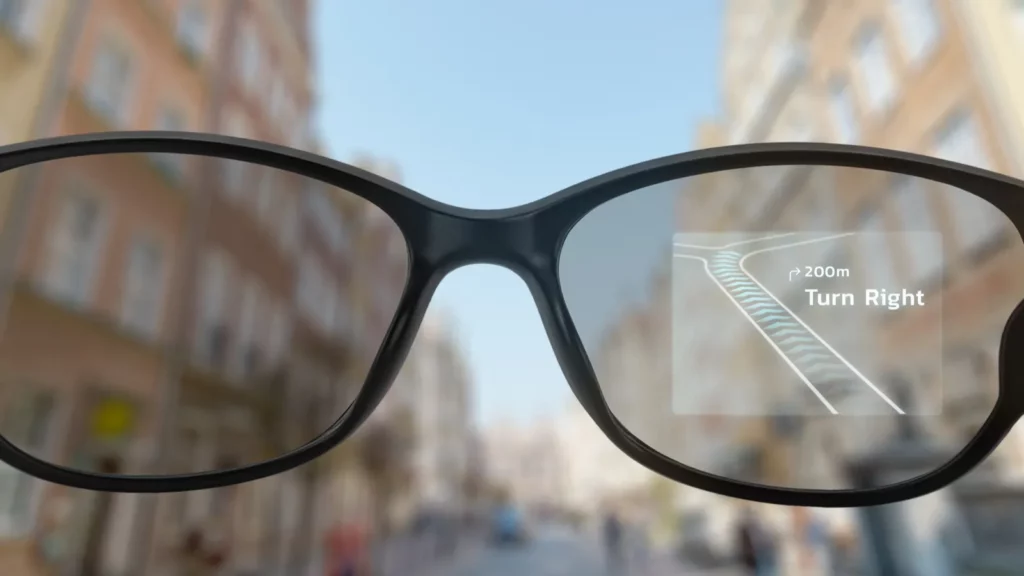
The most important technical decision behind Memo One is its dual-eye display system. Instead of projecting information into a single eye, MemoMind uses two wider displays, one for each eye. This dramatically improves readability and reduces the need for unnatural eye movement.
In practice, text appears sharper, brighter, and more balanced. Your eyes work together rather than competing, which makes reading translations, reminders, or notes feel closer to reading a subtitle than squinting at a floating widget.
This may sound like a small change, but it addresses one of the most overlooked pain points in AR: cognitive comfort. By reducing strain, MemoMind makes short interactions feel lighter and longer interactions more sustainable.
AI features designed for quick interactions
Memo One runs on a multi-LLM hybrid operating system that supports OpenAI, Azure, and Qwen at launch. Instead of overwhelming users with menus, the glasses rely on a single physical button and voice input to trigger features.
These include live translation, conversation recording and summarization, calendar access, music playback, and teleprompter-style reading. The goal is not to replace your phone, but to reduce how often you need to pull it out.
Live translation stands out as the most compelling feature. During demos, Memo One translated Mandarin into English in near-real time, displaying text cleanly across both eyes.
While there is still an unavoidable trade-off between reading translations and maintaining eye contact, the experience feels more natural than that of competing products. The dual-display setup helps keep information at a glance, rather than demanding constant focus.
Solving the “always-on” problem
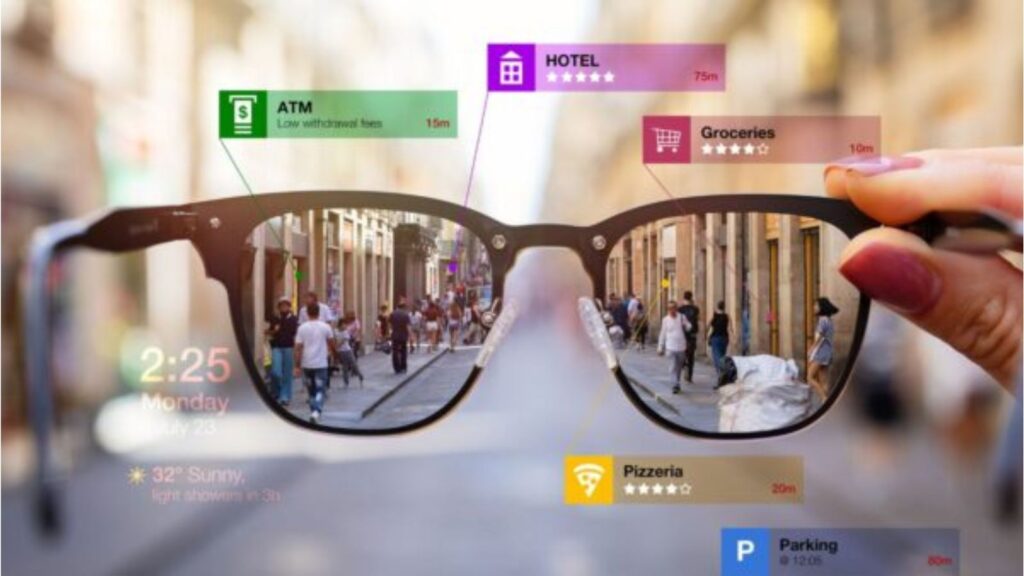
Another major reason AR glasses struggle in daily life is battery anxiety. Many smart glasses attempt to stay active at all times, draining power even when the user is not interacting with them. MemoMind takes a different approach.
The displays only turn on when needed. Once a task is finished, the glasses return to being just glasses. There is no persistent overlay, no glowing indicator, and no sense that you are constantly “inside” a system.
This design choice enables significantly longer battery life, with MemoMind claiming up to 16 hours of use. Just as importantly, it reduces mental clutter. The glasses do not compete for attention when not in use.
A deliberate decision to skip the camera
Perhaps the most surprising choice MemoMind has made is leaving cameras out of its first batch of wearables entirely. In a market where cameras are often seen as essential, this is a bold move.
But it is also strategic. Cameras introduce privacy concerns, regulatory challenges, higher power consumption, and social discomfort. By excluding them, MemoMind keeps the focus on AR as a personal productivity and accessibility tool, rather than a recording device.
For many users, this could actually be a benefit. The glasses feel less invasive, more acceptable in meetings or public spaces, and easier to trust.
Little‑known fact: After Google Glass launched, some bars, restaurants, and theaters in the US and UK banned its use over privacy concerns about its built-in camera recording people without consent.
Accessibility and real-world utility
MemoMind’s approach has broader implications for accessibility. Dual-eye displays, clear text rendering, and reduced strain make the glasses potentially useful for users who struggle with hearing, language barriers, or memory recall.
Features like live translation, conversation summaries, and teleprompter-style prompts can assist professionals, travelers, and users with cognitive or sensory challenges. Because the glasses are not always active, they support these use cases without overwhelming the wearer.
This focus on practical utility, rather than spectacle, may be what finally makes AR glasses viable beyond early adopters.
What comes next for MemoMind
XGIMI plans to release Memo One in the second quarter of the year, with pricing starting around $599. A second product, Memo Air Display, is also planned.
It will offer a more traditional eyewear design at a lower price point but will drop some features, including built-in speakers and the dual-display system.
This tiered approach suggests MemoMind is testing different entry points into the market, rather than betting everything on a single flagship.
Little‑known fact: XGIMI is planning three distinct models in its MemoMind lineup at launch, not just Memo One and Memo Air Display, with each one balancing display capability and wearability differently.
Why this approach matters
The AR glasses market does not need more ambitious concepts. It needs products that respect how people actually live, work, and interact.
By focusing on comfort, readability, battery life, and cognitive ease, XGIMI’s MemoMind glasses tackle the biggest reason AR has failed to stick: they have been too demanding.
MemoMind does not try to turn glasses into phones. Instead, it treats them as subtle companions that step in when needed and disappear when they are not. If AR glasses are ever going to become part of daily life, this may be the blueprint that finally makes it happen.
For now, MemoMind does not claim to have solved everything. But by fixing the most basic usability problems first, XGIMI may have done something more important than launching another flashy wearable. It may have made AR glasses feel human.
This article was made with AI assistance and human editing.
If you liked this, you might also like:
Trending Products

iRobot Roomba Plus 405 (G181) 2in1 ...

Tipdiy Robot Vacuum and Mop Combo,4...

iRobot Roomba 104 2in1 Vacuum &...

Tikom Robot Vacuum and Mop Cleaner ...

ILIFE Robot Vacuum

T2280+T2108

ILIFE V5s Pro Robot Vacuum and Mop ...

T2353111-T2126121

Lefant Robot Vacuum Cleaner M210, W...