
A doorbell camera can now do more than show who is standing at the front door. Ring’s Familiar Faces feature has pushed smart home privacy back into the spotlight after a new lawsuit accused Amazon’s doorbell business of collecting facial recognition data from people who never gave consent.
The case centers on a difficult question for connected homes: who gets to approve biometric scanning when a camera sees visitors, delivery workers, neighbors, or people passing by? For Ring users, the feature may feel convenient, but for everyone caught in the frame, the privacy stakes are much bigger.
Lawsuit over Ring facial recognition
A federal class-action lawsuit filed in Seattle against Amazon’s Ring platform alleges that its Familiar Faces feature collected biometric facial data from millions of Americans without proper knowledge or consent, according to court filings from Virginia resident Charles Sigwalt.
The lawsuit seeks at least $5 million in damages, class action status, and claims that opt-in settings for homeowners do not protect bystanders who never consented to being scanned by doorbell cameras.
Familiar Faces controversy
Ring’s Familiar Faces feature uses AI-powered facial recognition to identify frequent visitors, allowing homeowners to tag friends and family so alerts can show names instead of generic person-detection notifications.
The controversy centers on claims that, although the feature is opt-in for homeowners, Ring cameras may still scan the faces of bystanders such as delivery workers, neighbors, and passersby without their consent.
Critics argue that cloud-stored facial recognition profiles create serious privacy risks for people who never agreed to be included in any facial recognition system.
Scale of biometric collection
Millions of Americans are believed to have been unknowingly captured in Ring camera fields of view, forming the basis of the lawsuit’s claim about large-scale biometric data collection without consent.
Subjects include delivery workers, neighbors, and pedestrians who never intended to interact with Ring devices but were still recorded and processed by facial recognition systems operating in the background.
Because biometric data cannot be changed like passwords, privacy advocates warn that any large-scale collection creates permanent security risks if databases are ever breached or misused.
Regulatory warnings history
Senator Ed Markey previously pressed Amazon over Ring’s privacy practices after the company disclosed that it had provided Ring footage to law enforcement in emergencies without user consent.
The Electronic Frontier Foundation warned in 2025 that biometric collection through Ring devices could expose Amazon to legal risk under state biometric privacy laws.
In October 2025, Senator Markey urged Amazon to abandon plans to add facial recognition technology to Ring doorbells, warning that the feature could collect biometric data from people who appear in front of a camera without their consent.
How Ring works with AI scanning
Ring doorbells and cameras can send alerts when someone is at the door or motion is detected. With a Ring Protect subscription or trial, users can review, save, and share recorded videos.
Familiar Faces detects faces when people approach a compatible camera, lets users label recognized people, and can show those names in alerts, Timeline, and Event History.
Ring says Familiar Faces profiles and facial recognition information are encrypted and stored in the cloud. Unnamed profiles are automatically removed after 30 days without recognition, while all profiles and facial recognition information are deleted after 180 days of no recognition.
Little-known fact: Familiar Faces launched in the U.S. in December 2025 and rolled out in the UK in April 2026.
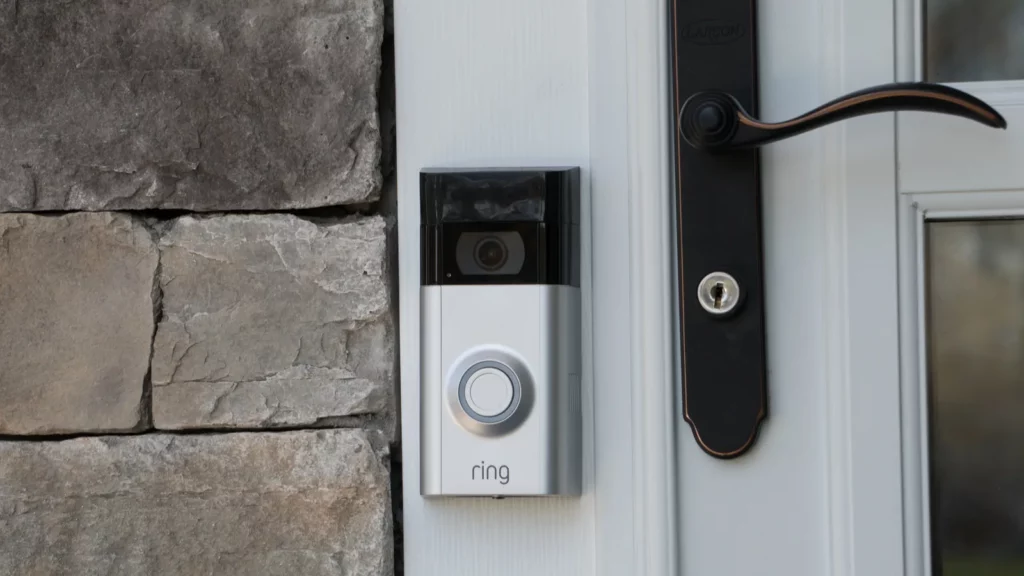
Privacy risks beyond lawsuit
Privacy advocates warn that features like Search Party and neighborhood monitoring could expand surveillance beyond basic home security into broader tracking of activity around homes and streets.
Ring’s history with law enforcement access has also raised concerns that wider biometric tools could increase pressure for more advanced surveillance requests in the future.
Consumers are becoming more aware of how smart doorbell systems collect and use data, especially when cloud storage and AI-powered identification features are involved.
Little-known fact: Between January 2019 and March 2020, more than 55,000 U.S. customers had Ring devices compromised by hackers, according to the FTC.
Industry rollout timeline 2025 2026
Ring began introducing facial recognition capabilities in late 2025 as part of its Familiar Faces rollout across select smart home devices in the United States, initially limited.
On October 30, 2025, Senator Markey demanded Amazon abandon its facial recognition expansion plans, citing unresolved privacy concerns and a lack of meaningful consent protections at the congressional level.
Amazon expanded the feature widely on May 18, 2026, making Familiar Faces available across a broader range of Ring doorbell products in supported regions at scale globally.
Little-known fact: The lawsuit also alleges Ring has no adequate policy for collecting facial recognition data from minors who may pass in front of a camera with Familiar Faces enabled.
Legal and financial implications
The class action seeks at least $5 million in damages and alleges violations of state biometric privacy laws across multiple jurisdictions in the United States, potentially setting a precedent.
The lawsuit also asks the court to place profits derived from biometric data collection into a constructive trust and award attorney fees to plaintiffs if a successful outcome.
If successful, the case could establish major precedent for facial recognition liability in smart home devices and influence how competitors design future AI systems across the entire industry.
What this means for smart homes
The lawsuit highlights the unprecedented scale of biometric data collection, with millions of Americans potentially included in facial recognition systems without ever directly engaging with the technology.
Experts recommend limiting cloud storage use, disabling optional facial recognition features, and carefully reviewing how smart home devices share data with third-party platforms and services externally.
Growing privacy concerns may affect consumer trust in smart doorbell products and influence how manufacturers balance convenience, security, and data protection in future devices moving forward industrywide.
Geographic restrictions state laws
Amazon has restricted rollout of Familiar Faces in states with strict biometric privacy laws, including Illinois and Texas, where consent requirements are significantly more stringent than in other regions.
These restrictions reflect ongoing legal pressure from state-level regulations that govern how companies collect, store, and process facial recognition data within consumer devices across jurisdictions globally.
States like Illinois have already seen multiple class action lawsuits related to biometric data collection, setting a legal environment that is increasingly hostile to unchecked facial recognition deployment.

TL;DR
- Ring faces a lawsuit over the Familiar Faces feature, allegedly collecting biometric data from millions of bystanders without consent across the United States neighborhoods.
- Plaintiffs argue opt in activation does not protect non-users captured by doorbell cameras, raising major consent and privacy concerns.
- Experts and regulators warn that biometric data collection creates permanent security risks because facial data cannot be changed if compromised or leaked.
- The case could reshape smart home industry rules on facial recognition and influence how companies deploy AI surveillance features in future products.
This article was made with AI assistance and human editing.
If you liked this, you might also like:
Trending Products

iRobot Roomba Plus 405 (G181) 2in1 ...

Tipdiy Robot Vacuum and Mop Combo,4...

iRobot Roomba 104 2in1 Vacuum &...

Tikom Robot Vacuum and Mop Cleaner ...

ILIFE Robot Vacuum

T2280+T2108

ILIFE V5s Pro Robot Vacuum and Mop ...

T2353111-T2126121

Lefant Robot Vacuum Cleaner M210, W...